

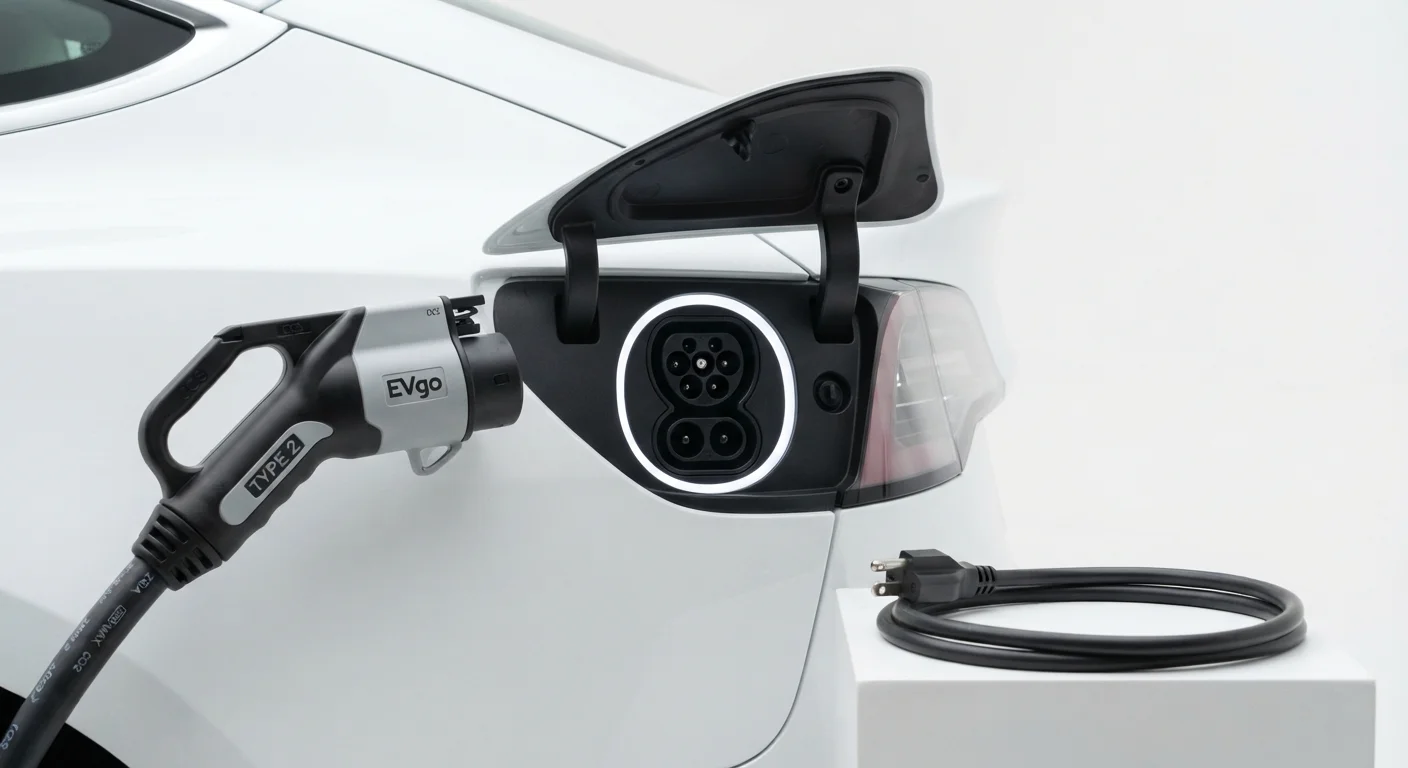
Key Takeaways
- EV batteries store energy as DC; AC power must be converted inside the vehicle before it reaches the battery.
- DC fast chargers bypass the onboard converter entirely, delivering power directly to the battery pack.
- AC charging is slower but gentler on battery chemistry over the long run.
- The speed of AC charging is limited by the vehicle's onboard charger capacity, not just the station.
- Not all EVs support the same DC fast-charging standards - connector compatibility matters.
- Frequent DC fast charging can accelerate battery degradation; most automakers recommend using it selectively.
Option A
AC Charging (Alternating Current)
The everyday, at-home charging standard.
Best for: Overnight home charging and workplace top-ups where time is not a constraint.
Option B
DC Fast Charging (Direct Current)
The rapid road-trip replenishment option.
Best for: Drivers who need a significant charge added quickly, typically during long-distance travel.
If you primarily charge at home overnight
AC Charging (Alternating Current)
AC Level 2 charging at home covers the range most drivers need daily without stressing the battery, and it's the most cost-effective setup long-term.
If you're on a long road trip and need a quick recharge
DC Fast Charging (Direct Current)
DC fast chargers can add substantial range in 20-45 minutes, making them the practical choice when you can't wait hours at a stop.
If you're concerned about long-term battery health
AC Charging (Alternating Current)
Regular AC charging avoids the heat and stress that repeated high-power DC sessions can introduce into battery cells over time.
How AC and DC Power Relate to Your EV Battery
Every EV battery pack stores and releases energy as direct current (DC) - electricity that flows in one consistent direction. The power delivered through most home outlets and public charging stations, however, is alternating current (AC) - electricity whose direction reverses many times per second.
This fundamental mismatch is the reason EV charging involves more complexity than simply plugging in. Before AC power can enter the battery, it must be converted to DC. The question is where that conversion happens - and that's precisely what separates AC charging from DC fast charging.
For a broader look at how everyday EV ownership works around charging habits, see how daily EV life differs from gas cars.
| Criterion | AC Charging | DC Fast Charging |
|---|---|---|
| Conversion location | Inside the vehicle (onboard charger) | Inside the charging station |
| Typical power range | 1.4 kW - 19.2 kW | 50 kW - 350 kW+ |
| Approximate range added per hour | 3-30 miles depending on level | 100-900+ miles equivalent per hour |
| Speed limiting factor | Vehicle's onboard charger rating | Vehicle's DC acceptance rate |
| Battery chemistry impact | Lower stress over time | More heat; higher long-term wear risk |
| Common use case | Home overnight, workplace charging | Road trips, quick top-ups on the go |
| Connector examples | J1772, NACS (AC mode) | NACS, CCS1, CHAdeMO |
AC Charging: Conversion Happens Inside the Car
When you plug into a standard home outlet (Level 1) or a Level 2 charging station, the electricity delivered is AC. Your vehicle contains a component called the onboard charger (OBC) - essentially a built-in AC-to-DC converter - that transforms the incoming power before it reaches the battery pack.
Because the OBC is a physical component with size and thermal constraints, it has a maximum power rating - commonly between 7.2 kW and 19.2 kW depending on the vehicle. That rating caps how fast the car can charge on AC, regardless of how capable the charging station itself is. A station rated at 19.2 kW delivers no benefit to a vehicle whose OBC tops out at 11 kW.
AC charging is generally slower - Level 1 might add 3-5 miles of range per hour; Level 2 typically adds 15-30 miles per hour. But it is also the gentler option for battery chemistry, making it well-suited to the nightly routine most EV owners settle into. For a deeper look at the differences between Level 1, Level 2, and DC fast charging, that comparison breaks down the practical trade-offs clearly.
~80%
EV charging sessions done at home
According to the U.S. Department of Energy, the large majority of EV charging in the United States occurs at residential locations overnight.
7.2-11 kW
Typical onboard AC charger rating
Most mainstream EVs sold in the U.S. ship with onboard chargers rated in this range, which sets the ceiling for Level 2 AC charging speed.
20-45 min
Typical DC fast-charge session for 80% fill
Charging to 80% - rather than 100% - via DCFC is generally faster because charging rates taper significantly in the final 20% to protect battery health.
DC Fast Charging: Conversion Happens Outside the Car
DC fast chargers - sometimes called DCFC stations - move the AC-to-DC conversion out of the vehicle entirely. The charging equipment itself handles that conversion, then pushes DC electricity directly into the battery pack, bypassing the onboard charger altogether.
This architectural difference is what enables dramatically faster charging speeds. Modern DC fast chargers can deliver 50 kW to 350 kW or more. In practice, the usable speed is limited by the vehicle's maximum DC acceptance rate - a spec listed in the vehicle's documentation - and the battery's state of charge, since charging rates taper as the battery fills to protect cell integrity.
It's also worth knowing that DC fast charging is not universally standardized. North American EVs have largely converged on the NACS (North American Charging Standard) connector, though older CCS1 and CHAdeMO adapters remain in the field. Verifying your vehicle's supported standard before a trip is essential. Certain charging habits around DC sessions also carry long-term implications - the charging mistakes that quietly shorten EV battery life article outlines what research and automaker guidance suggest avoiding.
Why Charging Slows Near 100%
Both AC and DC charging sessions typically slow down as the battery approaches full capacity. This tapering is intentional - the battery management system (BMS) reduces the incoming charge rate to prevent overheating and protect cell longevity. DC fast charging triggers this taper more aggressively because the incoming power is so much higher. Stopping a DC session at 80% rather than 100% is a common practice recommended by many automakers to preserve battery health over time.
What This Means for Your Day-to-Day Charging Strategy
Understanding this distinction helps EV owners make more deliberate choices. AC charging at home is convenient, cost-effective, and kinder to the battery over hundreds of cycles. DC fast charging is a powerful tool for road trips and unexpected situations - but it is generally recommended as a supplemental option rather than a daily routine.
The cost side of this equation is also worth weighing. Public DC fast-charging networks typically charge higher per-kWh or per-minute rates than home electricity. For a realistic look at how pricing compares, the real cost of charging at home vs. public stations walks through the math in practical terms.
If you're still getting comfortable with EV terminology, the EV glossary of 40 common terms is a useful reference for the language that appears on charging station screens, spec sheets, and vehicle apps.