

| Level 1 Charging Speed | ~3-5 miles of range per hour (Standard 120V outlet) |
| Level 2 Charging Speed | ~10-30 miles of range per hour (240V circuit, varies by vehicle) |
| DC Fast Charging Speed | Up to 350+ kW at compatible stations (CCS and CHAdeMO networks) |
| Energy Unit for Battery Capacity | Kilowatt-hours (kWh) (Used on all US window stickers) |
| Efficiency Metric on Window Sticker | MPGe (Miles Per Gallon Equivalent) (EPA standardized rating) |
| Common Connector Standard (US) | CCS (Combined Charging System) (Widely adopted for DC fast charging) |
Why EV Vocabulary Matters
Step into the world of electric vehicles and you'll quickly encounter a distinct vocabulary - on window stickers, in charging apps, in owner forums, and on the equipment at public stations. Terms like kWh, DCFC, and SOC aren't jargon invented to confuse; they describe real technical distinctions that affect how you charge, plan routes, and maintain your car.
This glossary covers 40 terms you're likely to encounter as an EV driver or prospective buyer. For a broader introduction to living with an electric car, see EV Ownership From Day One - a practical guide covering charging basics, range expectations, and common surprises for first-time owners.
Amperage (Amps)
The measure of electrical current flow. Higher amperage generally means faster charging when voltage is held constant. Your home charging equipment and EV each have maximum amperage ratings that together determine actual charge speed.
Battery Management System (BMS)
An onboard computer that monitors and controls battery charging, discharging, temperature, and overall health. The BMS protects the pack from conditions - such as overcharging or overheating - that would reduce its lifespan.
Kilowatt-hour (kWh)
The standard unit for measuring battery energy capacity, similar to how gallons measure a fuel tank's size. A vehicle with a 75 kWh pack can theoretically deliver 75 kilowatts of power for one hour before depleting.
Kilowatt (kW)
A unit of power measuring the rate of energy transfer. Charging speed is expressed in kW - a 7.2 kW charger delivers power roughly twice as fast as a 3.6 kW charger, all else being equal.
Level 1 Charging
Charging via a standard 120-volt household outlet using the cord typically included with the vehicle. It is the slowest method, adding roughly 3-5 miles of range per hour, and is best suited for overnight top-ups of vehicles with small batteries or low daily mileage.
Level 2 Charging
Charging via a 240-volt circuit, similar to those used by dryers or ovens. Level 2 adds roughly 10-30 miles of range per hour depending on the charger and vehicle, and is the most common home and workplace charging method.
DC Fast Charging (DCFC)
Direct-current fast charging delivers power directly to the battery, bypassing the vehicle's onboard charger and enabling significantly faster energy transfer - often 100-350+ kW at compatible stations. Also referred to as Level 3 charging.
Onboard Charger (OBC)
A component inside the vehicle that converts alternating current (AC) from the grid into direct current (DC) that the battery can store. The OBC's power rating sets the maximum Level 2 charging speed the car can accept.
State of Charge (SOC)
The battery's current charge level expressed as a percentage, similar to a fuel gauge. A reading of 80% SOC means the battery holds 80% of its usable capacity at that moment.
Regenerative Braking
A system that captures kinetic energy during deceleration and converts it back into electricity to recharge the battery. Regenerative braking reduces brake pad wear and extends driving range, though the amount of energy recovered varies by vehicle and setting.
PHEV (Plug-In Hybrid Electric Vehicle)
A vehicle with both an electric motor powered by a rechargeable battery and a conventional gasoline engine. PHEVs can be plugged in to charge and driven on electricity alone for a limited range, then switch to gasoline for longer trips.
BEV (Battery Electric Vehicle)
A fully electric vehicle powered exclusively by a battery pack, with no combustion engine. BEVs produce zero tailpipe emissions and must be recharged at a charging station or outlet - they cannot refuel with gasoline.
ZEV Credit
A regulatory credit issued to automakers for producing zero-emission vehicles. Under some state programs, manufacturers must earn a minimum number of ZEV credits, incentivizing EV production. Credits can sometimes be traded between manufacturers.
EPA Range Rating
The estimated driving range published by the US Environmental Protection Agency based on standardized test cycles. This figure appears on the vehicle's Monroney label and provides a consistent comparison point, though real-world range often differs based on driving conditions.
MPGe (Miles Per Gallon Equivalent)
A metric used by the EPA to compare EV efficiency to gasoline vehicles. It represents how many miles the vehicle can travel on the energy equivalent of one gallon of gasoline (33.7 kWh).
Thermal Management
Systems that regulate battery and motor temperature to maintain safe operating ranges. Effective thermal management improves charging speed, performance, and battery longevity, especially in extreme hot or cold conditions.
Charging, Power, and Energy Explained
Charging terminology is where new EV owners most often get tripped up. The distinctions between AC and DC charging, levels of charging equipment, and the units used to measure energy all have practical consequences for how quickly you can replenish range.
| Level 1 Charging Speed | ~3-5 miles of range per hour (Standard 120V outlet) |
| Level 2 Charging Speed | ~10-30 miles of range per hour (240V circuit, varies by vehicle) |
| DC Fast Charging Speed | Up to 350+ kW at compatible stations (CCS and CHAdeMO networks) |
| Energy Unit for Battery Capacity | Kilowatt-hours (kWh) (Used on all US window stickers) |
| Efficiency Metric on Window Sticker | MPGe (Miles Per Gallon Equivalent) (EPA standardized rating) |
| Common Connector Standard (US) | CCS (Combined Charging System) (Widely adopted for DC fast charging) |
For a deeper dive into how alternating and direct current differ inside your vehicle's charging system, The Difference Between AC and DC Charging Inside Your EV explains exactly how each type of current reaches your battery and why the distinction matters at a technical level.
Understanding battery capacity in kilowatt-hours (kWh) also helps contextualize range estimates. A larger pack doesn't always mean faster charging - charge rate acceptance (the maximum speed at which a battery can safely absorb energy) is equally important, and it varies by vehicle and battery temperature. To understand how all these components connect mechanically, How Electric Cars Actually Work provides a plain-language breakdown from battery pack to wheel.
Connector Standards Vary by Network
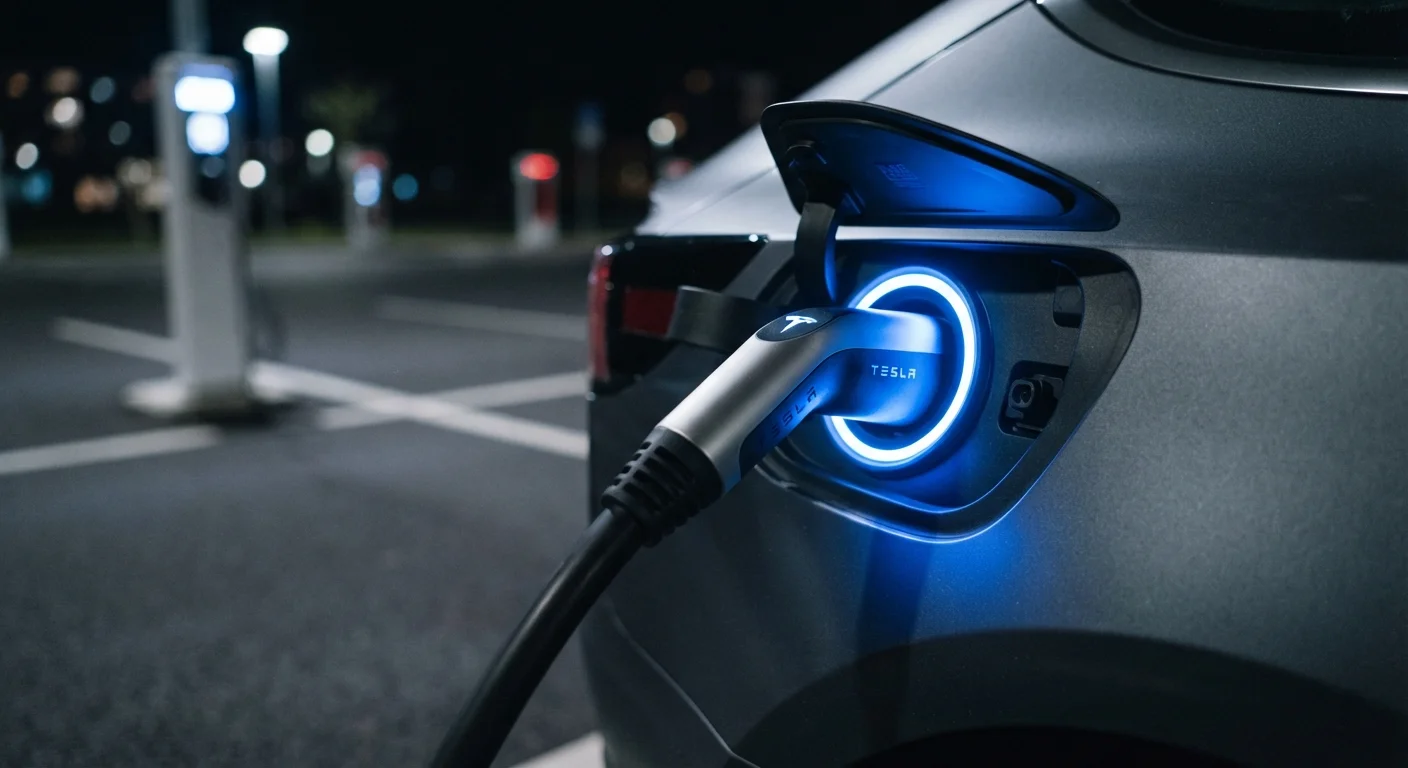
Not all fast-charging connectors are interchangeable. The Combined Charging System (CCS) and CHAdeMO are two different DC fast-charging standards, while some manufacturers have historically used proprietary connectors. Before relying on a specific charging network, verify your vehicle's connector type and whether adapters are available or needed. The industry has been moving toward greater standardization, but checking compatibility remains important when planning longer trips.
Range, Efficiency, and Battery Health
Range anxiety - the fear of running out of charge - is one of the most cited concerns among new EV drivers, and it's often rooted in unfamiliarity with how range figures are calculated and how real-world conditions affect them. EPA-rated range is a standardized estimate, not a guarantee; actual range varies with speed, temperature, payload, and driving style.
~20-30%
Typical range loss in cold weather
The US Department of Energy notes that EV range can decrease significantly in temperatures below freezing due to battery chemistry and cabin heating demand.
70-80%
Recommended daily charge limit for longevity
Many EV manufacturers and battery researchers suggest limiting routine charging to 80% SOC to reduce stress on lithium-ion cells over time.
8 years / 100K miles
Federal minimum battery warranty
US federal law requires automakers to warranty EV battery packs for at least 8 years or 100,000 miles, whichever comes first.
Plug-in hybrid electric vehicles (PHEVs) add an additional layer of complexity by publishing two separate range numbers. The Difference Between Electric Range and Total Range on a Plug-In Hybrid clarifies what each figure means and how to use both when planning trips.
Battery degradation - a gradual reduction in usable capacity over time - is a normal process. Most manufacturers publish capacity retention warranties, typically guaranteeing a minimum percentage of original capacity over a set number of years or miles. EV maintenance overall looks quite different from a gasoline vehicle; EV Maintenance: What Changes and What Disappears covers what owners should expect and what they can stop worrying about.
For drivers interested in semi-autonomous features - which appear prominently in many EVs - Semi-Autonomous Driving Features Explained clarifies what ADAS systems actually do and why the naming can be misleading.