

Key Takeaways
- Level 1 uses a standard 120V outlet and adds roughly 3-5 miles of range per hour.
- Level 2 runs on 240V and is the most practical everyday solution for most EV owners.
- DC fast charging can add significant range in 20-30 minutes but isn't ideal for daily battery health.
- Charging speed depends on both the station's output and your vehicle's onboard acceptance rate.
- Most EV owners rely primarily on Level 2 at home, with DC fast charging reserved for road trips.
Our Verdict
No single charging level is universally superior - each serves a distinct purpose. Level 1 is a low-cost fallback for light daily driving; Level 2 is the practical backbone of home and workplace charging; DC fast charging is the road-trip enabler that trades long-term battery convenience for speed. Understanding when to use each is one of the most valuable skills an EV owner can develop.
| Best for | Recommended |
|---|---|
| Drivers with short daily commutes and overnight parking access | Level 1 |
| Most everyday EV owners who charge at home or work | Level 2 |
| Long-distance road trippers needing quick range top-ups | DC Fast Charging |
| Those wanting to balance speed and battery longevity over time | Level 2 |
The Three Tiers of EV Charging Explained
Electric vehicle charging in the US is organized into three distinct levels, each defined by the voltage and power it delivers. These aren't brand names or marketing tiers - they're standardized designations that describe how quickly electricity flows into your battery. Understanding the differences helps you plan smarter, whether you're setting up home charging or mapping a cross-country drive.
At the most basic level, all EV charging works by replenishing the battery's stored energy. The key variable is how fast that energy is delivered - measured in kilowatts (kW). A higher kilowatt rating means faster charging, but your vehicle's onboard charger also sets an upper limit on how much power it can actually accept. For a deeper look at how alternating and direct current reach your battery differently, see how AC and DC charging differ inside your EV.
| Level 1 | Level 2 | DC Fast Charging | |
|---|---|---|---|
| Voltage | 120V AC | 240V AC | Up to 1,000V DC |
| Typical power output | 1.2-1.9 kW | 7-19 kW | 50-350 kW |
| Approximate range added per hour | 3-5 miles | 15-30 miles | Up to 200+ miles per session |
| Installation required | None | 240V circuit + EVSE unit | Commercial infrastructure |
| Best use case | Backup / light commuters | Daily home or workplace charging | Road trips and quick top-ups |
| Battery health impact | Minimal | Minimal | Higher with frequent use |
| Typical cost to driver | Standard electricity rate | Electricity rate + equipment | Per-kWh or per-minute fee |
Level 1: The Standard Outlet Option
Level 1 charging uses a conventional 120-volt household outlet - the same type that powers a lamp or phone charger. Every EV sold in the US includes a Level 1 cord, making this the zero-installation option. However, the tradeoff is speed: Level 1 typically delivers between 1.2 and 1.9 kW, adding approximately 3-5 miles of range per hour of charging.
For a driver commuting 30 miles daily, overnight Level 1 charging can be sufficient. But for vehicles with larger battery packs or longer commutes, Level 1 alone often falls short. It's best understood as a backup solution or a supplemental option when no faster charger is available - not a primary strategy for most EV owners.
Level 1 Works Best With a Routine
If your daily drive is 25-40 miles or less and you park at home overnight, Level 1 can realistically keep up with your needs without any additional equipment. The key is plugging in consistently each evening rather than waiting until the battery is low. Think of it like charging a phone - small, regular top-ups add up reliably.
Level 2: The Everyday Workhorse
Level 2 charging operates on 240 volts - the same supply used by electric dryers and ranges - and typically delivers between 7 and 19 kW depending on the equipment and vehicle. That translates to roughly 15-30 miles of range added per hour, making an overnight charge sufficient for nearly any daily driving scenario.
Home installation requires a dedicated 240V circuit and a compatible EV Supply Equipment (EVSE) unit. Qualified electricians handle this work; costs vary by home wiring configuration and local labor rates. Level 2 stations are also widely deployed at workplaces, parking garages, and retail locations. For a broader look at public charging access, see navigating public charging networks across the US.
~80%
EV owners who charge primarily at home
According to the US Department of Energy, the large majority of EV charging sessions in the US occur at residential locations.
19 kW
Maximum Level 2 output for most home units
Most residential Level 2 EVSE installations operate between 7-19 kW depending on circuit capacity and vehicle acceptance rate.
DC Fast Charging: Speed When You Need It
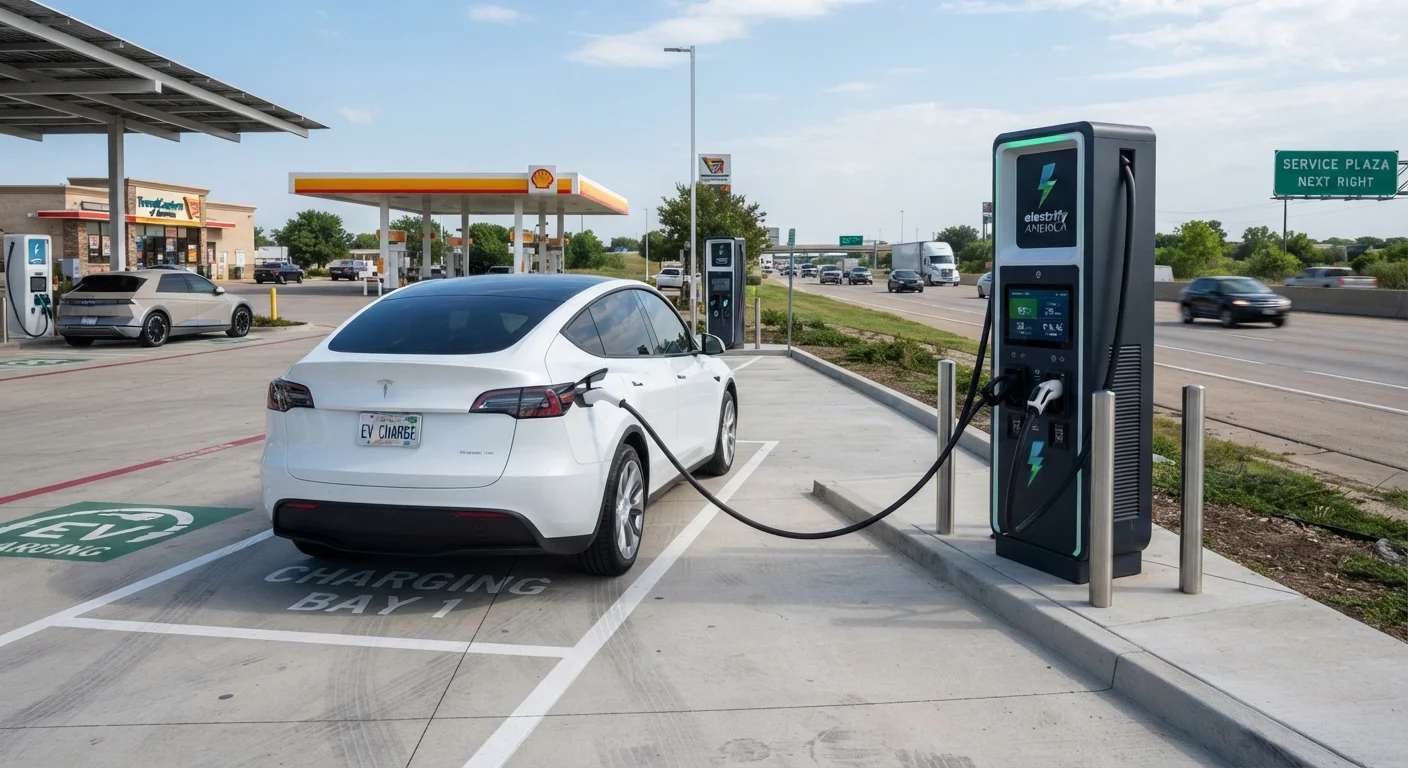
DC fast charging - also called Level 3 - bypasses the vehicle's onboard AC-to-DC converter and delivers direct current straight to the battery. Output ranges from around 50 kW at older stations to 350 kW at the most capable installations. In practical terms, many EVs can recover 100-200 miles of range in 20-30 minutes at a suitable fast charger.
There are important caveats. Not all vehicles support DC fast charging, and those that do have varying acceptance rates. A vehicle rated for 150 kW won't charge faster at a 350 kW station than at a 150 kW one. Additionally, charging speed deliberately tapers as the battery approaches 80% capacity - a protective measure rooted in battery chemistry. For the full explanation of why, see why fast charging slows after 80%.
Frequent DC fast charging - particularly to 100% - can contribute to accelerated battery degradation over time, though the magnitude varies by vehicle and battery management system. Most manufacturers recommend using fast charging selectively rather than exclusively. Connector compatibility also matters; see EV connector standards in the US for a guide to CCS, NACS, CHAdeMO, and J1772.
Avoid Routine 100% DC Fast Charges
Regularly charging to full capacity via DC fast charging can accelerate battery wear over time on some vehicles. Most automakers and battery experts suggest keeping fast charging sessions to what you need for the drive ahead - typically to 80% - and relying on Level 2 for routine top-ups. Always consult your vehicle's owner manual for manufacturer-specific guidance.
Choosing the Right Charger for Your Situation
Most EV owners develop a natural rhythm: Level 2 at home handles the majority of charging needs, while DC fast chargers serve longer trips where time is a constraint. Level 1 fills gaps - hotel stays, visits to family, or any scenario where a standard outlet is the only option available.
The state of EV charging infrastructure in America continues to evolve, with federal investment expanding both Level 2 and DC fast charging coverage. For EV owners thinking about the full picture of vehicle management, the Ownership hub covers maintenance, insurance, and practical considerations across the life of your vehicle.
The right charging approach isn't fixed - it adapts to your vehicle's capabilities, your daily mileage, and where you travel. Knowing the strengths and limitations of each level puts that decision firmly in your hands.