

Key Takeaways
- Total US electricity generation capacity is generally considered large enough to absorb EVs gradually, but local distribution infrastructure is the real bottleneck.
- Charging timing matters enormously - overnight off-peak charging creates far less grid stress than millions of drivers plugging in simultaneously after work.
- Transmission and neighborhood-level distribution upgrades are the costliest and slowest part of the readiness equation.
- Smart charging technology and vehicle-to-grid programs could help balance load rather than simply add to it.
- Rural and lower-income communities face uneven grid capacity challenges that national averages tend to obscure.
Grid Readiness for EVs
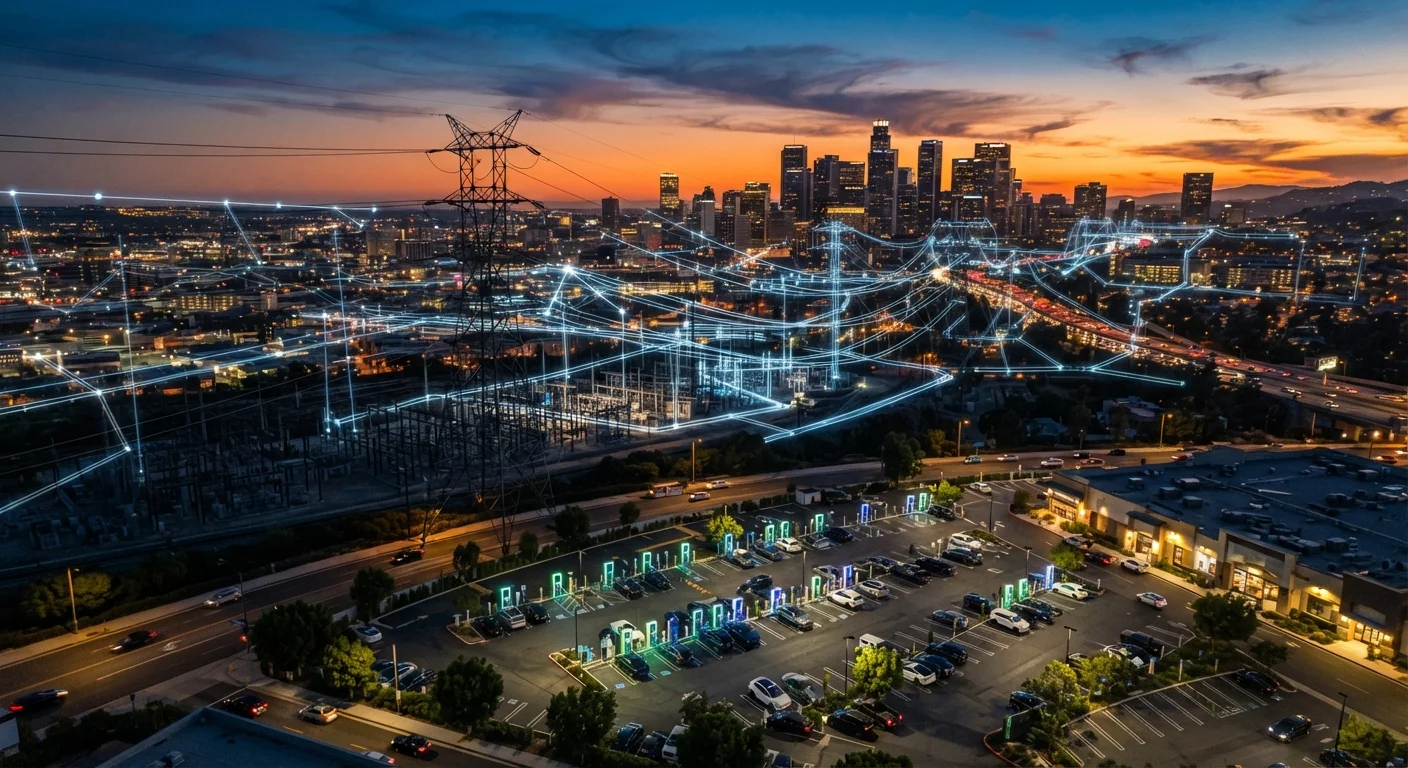
Grid readiness refers to the electric power system's ability to supply reliable, affordable electricity at the scale required if millions of Americans switch to electric vehicles. It involves generation capacity, transmission lines, local distribution networks, and the timing of when drivers charge their cars. A grid that handles today's demand may still struggle if EV adoption accelerates faster than infrastructure investment.
Utilities measure readiness using peak-demand modeling - projecting the added load from EVs against available generation and distribution headroom, expressed in gigawatts (GW) or terawatt-hours (TWh).
Why the Grid Debate Is More Nuanced Than Headlines Suggest
News coverage of EVs often frames grid readiness as a binary question: ready or not. The reality is more layered. The US power system is not a single entity - it is a patchwork of regional grids, investor-owned utilities, municipal systems, and rural cooperatives, each with different levels of spare capacity, aging infrastructure, and investment momentum.
At the national level, total generation capacity is substantial. The US generates roughly 4,000 terawatt-hours of electricity annually, and the vast majority of studies suggest that gradual EV adoption can be absorbed without requiring an equivalent percentage increase in generation - largely because EVs can charge at night when existing plants are underutilized. The problem is not always supply; it is often delivery.
Generation vs. Distribution: A Key Distinction
When experts say the grid can 'handle' EV growth, they often mean total electricity generation capacity is sufficient. But generation and distribution are separate systems. Even if enough power exists nationally, getting it reliably to every neighborhood charger requires local infrastructure investment that varies widely by region and utility.
The distribution grid - the neighborhood-level poles, wires, and transformers that move electricity from substations to homes - was designed decades ago around the loads of the era. Adding dozens of EVs to a single residential street can stress equipment that was never sized for that draw.
The Real Bottleneck: Local Distribution Infrastructure
Transmission lines carry bulk power across states; distribution systems carry it the last mile. Grid experts broadly agree that transmission and distribution upgrades - not raw generation - represent the most pressing and expensive challenge for EV integration.
A single Level 2 home charger draws roughly 7 to 11 kilowatts. A DC fast charger at a commercial station can draw 50 to 350 kilowatts. When multiple fast chargers cluster in one location, or when an entire subdivision adopts EVs simultaneously, local transformers and feeder lines can approach their limits. Utilities must identify these stress points through load studies and upgrade equipment proactively - a process that takes time and capital.
~25-30%
Estimated increase in US electricity demand if entire passenger fleet electrifies
Multiple energy research analyses suggest this range, spread over decades, is manageable with corresponding generation and grid investment.
50-350 kW
Power draw of a single DC fast charger
Compared to a home Level 2 charger at roughly 7-11 kW, commercial fast chargers concentrate significant load on local distribution equipment.
~4,000 TWh
Annual US electricity generation
The US Energy Information Administration tracks national generation; this existing capacity provides headroom for gradual EV load growth, particularly during off-peak hours.
For a deeper look at where public charging infrastructure currently stands, see the state of EV charging infrastructure in America.
Charging Behavior: The Variable Utilities Are Watching Closely
When drivers charge is almost as important as how many charge. If adoption follows a pattern where most EV owners return home between 5 and 8 p.m. and immediately plug in, that demand lands directly on top of the existing evening peak - the most stressful period for the grid. Utilities refer to this as the "double peak" problem.
Smart charging programs - which use time-of-use electricity rates or automated scheduling to shift charging to overnight hours - are seen as one of the most practical near-term tools. Some utilities already offer discounted rates for off-peak EV charging. Vehicle-to-grid (V2G) technology takes this further, potentially allowing EVs to return stored energy to the grid during high-demand periods, effectively turning parked cars into distributed storage assets.
Charge Overnight When Possible
Plugging in after 10 p.m. and scheduling charging to finish before morning typically places your EV's demand during the lowest-stress hours for the local grid. Many EVs and home chargers have built-in scheduling features that automate this. Check whether your utility offers an off-peak EV charging rate - savings can be meaningful over time.
Geographic Disparities and the Rural Challenge
National averages mask significant regional variation. Dense urban areas with recently upgraded infrastructure may handle EV growth more readily than older industrial cities or rural counties where distribution equipment is aging and investment has lagged. Rural EV ownership involves unique grid challenges: lower grid redundancy, longer distances between substations, and limited utility resources for rapid upgrades.
Equity considerations also matter. Communities with older housing stock may have electrical panels that need upgrading before a Level 2 charger can be safely installed - an out-of-pocket cost that is not evenly distributed. Policy discussions around EV grid readiness increasingly include these access and fairness dimensions alongside raw capacity numbers.
For drivers navigating public networks while traveling, public charging across the US offers practical guidance on what to expect at different charge point types.
“The grid can handle EVs, but it won't happen automatically. It requires utilities to invest in the right places, regulators to set the right incentives, and drivers to charge at the right times.”
— Rocky Mountain Institute, Energy think tank focused on clean energy transition research
This article is for informational purposes only. Grid capacity projections and infrastructure timelines vary by region and are subject to ongoing policy and regulatory changes. Consult your local utility for information specific to your area.