

Key Takeaways
- Every character in a VIN carries specific meaning, from manufacturer to model year to production sequence.
- Your VIN is essential for running vehicle history reports, ordering correct parts, and verifying title status.
- VINs can be found in multiple locations on a vehicle, including the dashboard, door jamb, and title documents.
- The ninth character of a VIN is a check digit used to detect fraudulent or altered numbers.
- Always verify a used vehicle's VIN matches across the dash, door jamb, title, and insurance card before buying.
Vehicle Identification Number (VIN)
A Vehicle Identification Number, or VIN, is a unique 17-character code assigned to every motor vehicle manufactured or sold in the United States. It functions like a fingerprint - no two vehicles in operation share the same VIN. The code encodes key details about where the vehicle was built, who made it, its specifications, and its individual serial number.
The current 17-character VIN standard was established by the National Highway Traffic Safety Administration (NHTSA) and has been required on all US-market vehicles since the 1981 model year.
How a VIN Is Structured
A VIN's 17 characters are divided into three logical sections, each serving a distinct purpose.
- World Manufacturer Identifier (WMI) - Characters 1-3: The first character identifies the country of manufacture (for example,
1,4, or5indicates the United States;Jindicates Japan). Characters two and three identify the specific manufacturer and vehicle type. - Vehicle Descriptor Section (VDS) - Characters 4-9: This middle block describes the vehicle's attributes - including body style, engine type, restraint systems, and model line. Character nine is a mathematically derived check digit, calculated from the other characters and used to verify the VIN's authenticity.
- Vehicle Identifier Section (VIS) - Characters 10-17: Character ten encodes the model year using a standardized letter or number system. Character eleven identifies the assembly plant. Characters twelve through seventeen form the vehicle's unique production sequence number.
Notably, the letters I, O, and Q are never used in VINs to avoid confusion with the numbers 1 and 0.
Model Year Encoding Is Not Calendar Year
Character ten of the VIN represents the model year, but model years don't align perfectly with calendar years. Automakers typically begin producing the next model year in the summer or fall of the prior calendar year. A vehicle built in August may carry the following year's model designation. Always check character ten rather than assuming the model year from the build date.
Where to Locate Your VIN
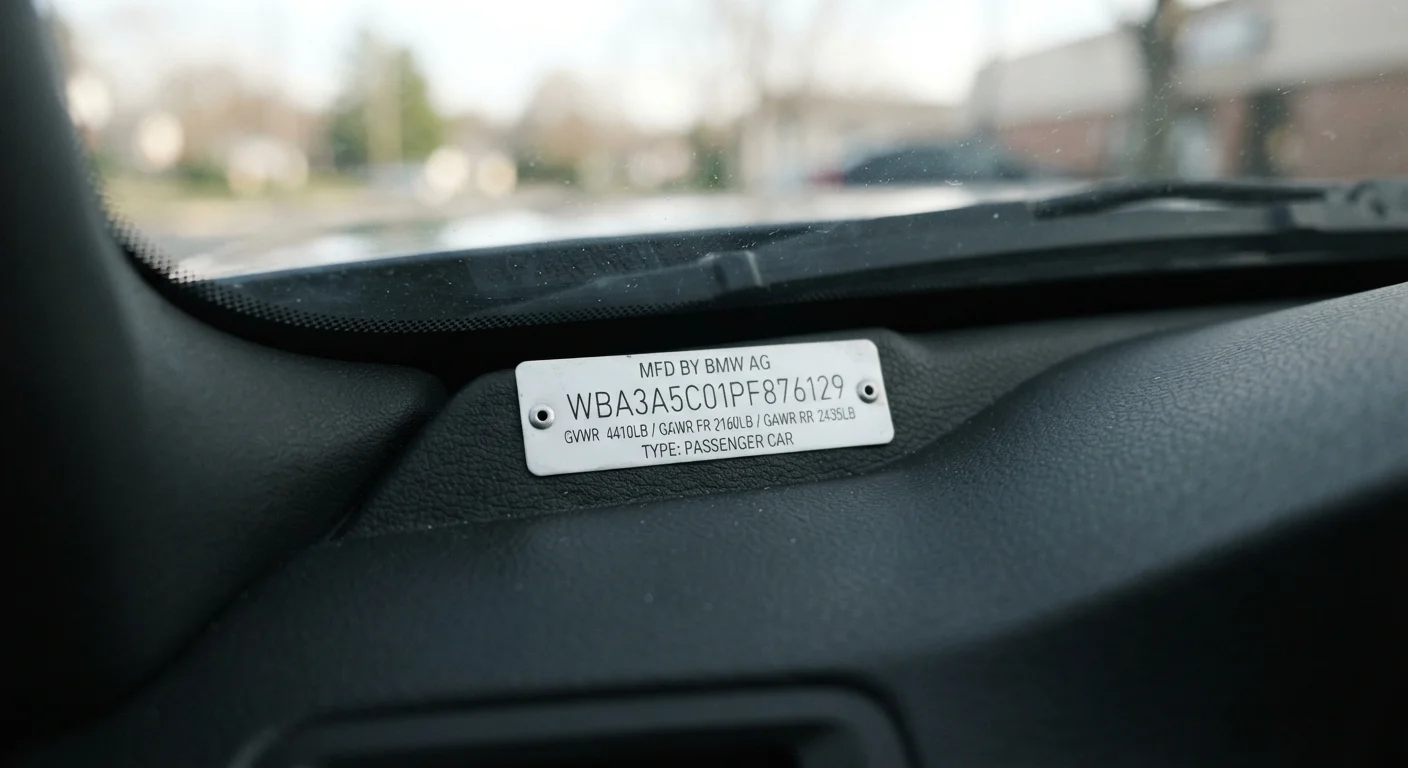
Manufacturers are required to display the VIN in multiple places to deter tampering and simplify verification. The primary location is the dashboard plate, visible from outside the vehicle through the lower-left corner of the windshield on the driver's side. Additional locations include:
- The driver's side door jamb sticker
- Under the hood, typically stamped on the firewall or engine block
- The vehicle's title certificate and registration documents
- Your insurance card and policy documents
If the VIN on the dash doesn't match the one on the door jamb or title, that's a serious warning sign - whether on a vehicle you own or are considering purchasing. Mismatched VINs can indicate fraud, VIN cloning, or undisclosed collision history. For a broader look at what ownership documents you should track, see our guide to comprehensive car ownership.
Why Your VIN Matters for Ownership
Your VIN is the connective thread running through almost every significant ownership task:
17
Characters in every standardized VIN
Required by NHTSA for all vehicles sold in the US since the 1981 model year.
Free
Cost to check open recalls by VIN
NHTSA's official recall lookup tool at nhtsa.gov allows any owner to search by VIN at no charge.
9th
Position of the VIN check digit
The check digit is mathematically derived from the other 16 characters and is used to verify VIN authenticity.
Parts and recalls: When ordering replacement parts or checking open safety recalls, the VIN ensures you get components specific to your vehicle's exact build. NHTSA's recall database at nhtsa.gov allows free recall searches by VIN.
Title and registration: Your vehicle's title is tied to its VIN. Understanding the title status attached to that VIN matters - particularly if a vehicle was previously written off. Salvage, rebuilt, and clean title designations all trace back to events recorded against the VIN.
Vehicle history reports: Services that compile accident records, odometer readings, and ownership transfers organize all of that data by VIN. Knowing how to interpret what comes back is just as important as pulling the report - something our article on how to read a vehicle history report covers in detail.
Insurance: Insurers use the VIN to confirm vehicle specs and history when pricing a policy. Providing an incorrect VIN - even accidentally - can complicate claims.
Cross-Check the VIN Before Any Used Car Purchase
Before finalizing a used vehicle purchase, physically compare the VIN on the dashboard, the door jamb sticker, and the title document. All three should match exactly. A mismatch - even a single character - warrants further investigation and is a valid reason to walk away from a deal.
If you're new to ownership and working through the basics, our First-Time Car Owner's Starter Guide covers how the VIN fits into the broader picture of registration, insurance, and maintenance.