

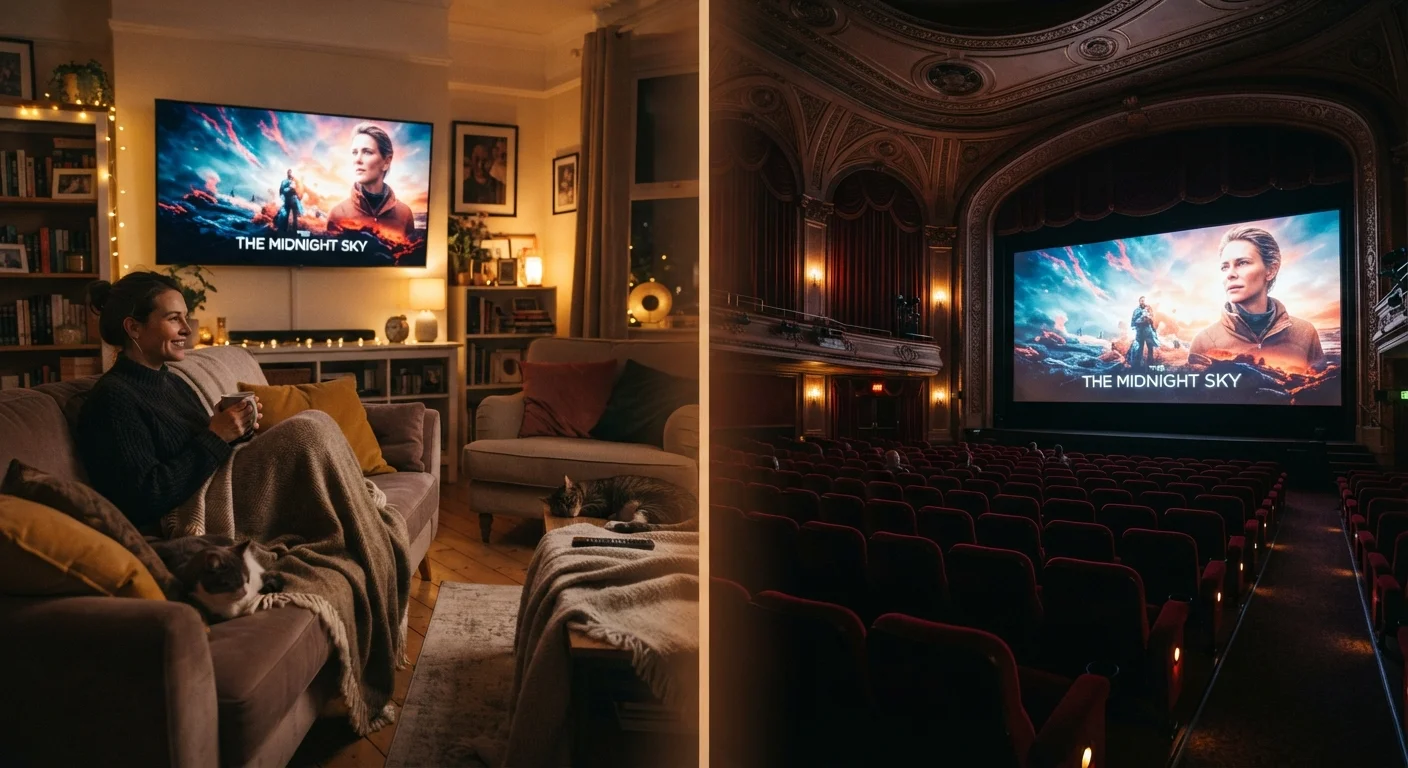
Key Takeaways
- Theaters offer immersive audio-visual experiences that home setups rarely replicate fully.
- Home viewing provides comfort, flexibility, and cost savings for frequent film watchers.
- The best choice often depends on the type of film and who you're watching with.
- Streaming windows have shortened, but some films still arrive on home platforms weeks after theaters.
- Neither option is objectively superior - both serve genuine, different viewing needs.
Immersive large-format audio and visuals
Commercial theaters use calibrated projection and surround sound systems that most home setups haven't matched. For visually ambitious films, the scale difference is genuinely significant.
Distraction-free viewing environment
Darkened auditoriums with no phones, notifications, or household interruptions make it easier to stay fully absorbed - a real advantage for complex or emotionally demanding films.
Shared communal atmosphere
Reacting alongside an audience - whether laughing, gasping, or sitting in stunned silence - adds an emotional dimension that solo or small-group home viewing rarely replicates.
First access to new releases
Theaters still premiere most major studio films weeks before they reach streaming, meaning audiences who want to engage with cultural conversations early need the cinema option.
Higher per-viewing cost
Theater tickets, parking, and concessions can easily add up to $30-$60 or more per person for a single outing, compared to a fraction of that cost when streaming at home.
No control over playback or environment
You can't pause, rewind, or adjust audio levels. Disruptive fellow audience members and poor sight lines are real variables that affect enjoyment.
Fixed scheduling and travel required
Showtimes are predetermined, and getting to and from the venue adds time and logistical effort - a genuine barrier for busy households or those without easy transit access.
Limited comfort compared to home
Theater seating, while improved at many venues, still can't match a personal couch setup, and food options are generally restricted to what the venue sells.
Our Verdict
Theaters remain the gold standard for visually spectacular, large-scale films where shared atmosphere elevates the experience. Home viewing wins on convenience, cost control, and comfort - especially for dramas, documentaries, and rewatches. The honest answer is that neither format has made the other obsolete.
Cinephiles chasing the full spectacle of blockbusters will favor theaters, while those who prioritize flexibility, quiet, and value will find home viewing consistently more practical.
Why This Choice Actually Matters
For decades, the movie theater was the only game in town. Now, with streaming libraries expanding and home display technology improving year over year, Americans genuinely split their film-watching between two very different environments. The decision isn't trivial - it shapes how much you spend, how engaged you feel, and even how well you remember the story afterward.
As studios navigate shifting release strategies, the gap between theatrical and home availability has narrowed significantly. Understanding what each setting actually delivers - and gives up - helps you make that call intentionally. For a broader look at how this split is reshaping the industry, see what the theatrical vs. streaming shift really means for moviegoers.
The Case for Going to the Theater
A well-designed movie theater is an engineered sensory environment. The screen fills your peripheral vision, the calibrated surround sound wraps around the audience, and the darkness removes every competing distraction. For films built around scale - action epics, sci-fi spectacles, horror - that environment isn't just a bonus. It's core to how the filmmakers intended the work to land.
Immersive large-format audio and visuals
Commercial theaters use calibrated projection and surround sound systems that most home setups haven't matched. For visually ambitious films, the scale difference is genuinely significant.
Distraction-free viewing environment
Darkened auditoriums with no phones, notifications, or household interruptions make it easier to stay fully absorbed - a real advantage for complex or emotionally demanding films.
Shared communal atmosphere
Reacting alongside an audience - whether laughing, gasping, or sitting in stunned silence - adds an emotional dimension that solo or small-group home viewing rarely replicates.
First access to new releases
Theaters still premiere most major studio films weeks before they reach streaming, meaning audiences who want to engage with cultural conversations early need the cinema option.
There's also a social dimension that streaming can't quite replicate. Laughing with strangers, jumping together at a scare, or sitting in shared silence during an emotional scene creates a collective experience that watching alone simply doesn't. Streaming watch parties have attempted to recreate this, but the physical presence of an audience still produces something meaningfully different.
~45 days
Average theatrical-to-streaming window
Most major studio films have moved to a roughly 45-day exclusive theatrical window before streaming availability, down from the traditional 90 days prior to 2020.
61%
Americans who prefer home movie viewing
A 2023 Statista survey found that a majority of U.S. adults said they prefer watching movies at home over going to a theater.
The Case for Watching at Home
Home viewing has become genuinely compelling, not just convenient. A quality large-screen TV or projector setup - projectors and large-screen TVs each have distinct trade-offs - can deliver impressive picture quality. You control the pause button, the volume, the snacks, and the company. For subtitled foreign films especially, home viewing lets you read at your own pace without neck strain - a factor explored further in the dubbing vs. subtitles debate.
Higher per-viewing cost
Theater tickets, parking, and concessions can easily add up to $30-$60 or more per person for a single outing, compared to a fraction of that cost when streaming at home.
No control over playback or environment
You can't pause, rewind, or adjust audio levels. Disruptive fellow audience members and poor sight lines are real variables that affect enjoyment.
Fixed scheduling and travel required
Showtimes are predetermined, and getting to and from the venue adds time and logistical effort - a genuine barrier for busy households or those without easy transit access.
Limited comfort compared to home
Theater seating, while improved at many venues, still can't match a personal couch setup, and food options are generally restricted to what the venue sells.
Cost is a recurring factor. A household streaming subscription spread across multiple films per month typically costs far less per viewing than theater tickets, parking, and concessions for even one outing. That math compounds quickly for families or frequent watchers.
Offline Viewing Is Another Option
Some streaming platforms allow you to download films for offline viewing, which adds flexibility beyond standard home streaming. If you're weighing when that approach makes sense, downloading vs. streaming breaks down the practical differences and platform limitations worth knowing.
What the Film Itself Should Tell You
The most practical framework is to let the film's nature guide the decision. Visually immersive blockbusters with dense sound design reward the theater environment. Intimate character studies, dialogue-driven dramas, and documentary features often lose little - sometimes nothing - on a good home screen. Rewatches almost universally favor home viewing, where pausing and revisiting scenes is natural rather than disruptive.
Release windows are another consideration. Most theatrical films arrive on streaming platforms within 45 days of their cinema debut, though that timeline varies by studio and distribution deal. If a film isn't driving you toward urgency, patience is often the most economical option. The rise of streaming-exclusive films has further complicated this landscape, with some major productions bypassing theaters entirely.
Ultimately, the format is part of the art. Choosing thoughtfully - rather than defaulting to habit - tends to make both experiences more satisfying.