

| Oldest continuous venue on this list | Grand Ole Opry (est. 1925) (Grand Ole Opry official history) |
| CBGB's original programming intent | Country, bluegrass, and blues (CBGB historical records) |
| Apollo Theater location | 125th Street, Harlem, New York City (Apollo Theater Foundation) |
| Preservation Hall founding year | 1961 (Preservation Hall Foundation) |
| The Fillmore's cultural peak | Mid-1960s to early 1970s under Bill Graham (Bill Graham Presents archives) |
| Grand Ole Opry format | Live radio broadcast (longest-running in U.S. history) (WSM Radio / Opry Entertainment Group) |
Why Venues Matter as Much as the Music
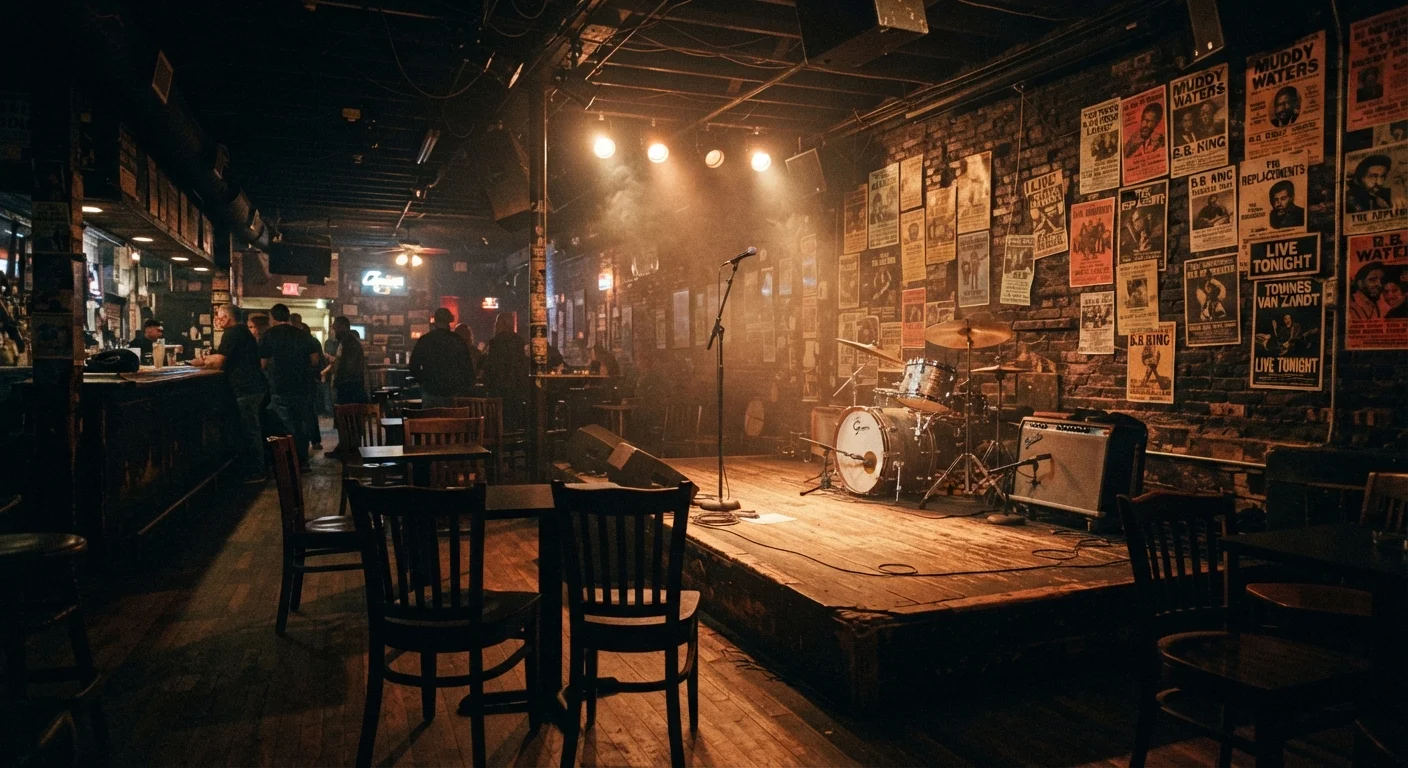
Behind every defining moment in American music history, there's usually a room. Not just a stage or a sound system - an actual physical place with a specific smell, a particular crowd energy, and a ZIP code that became shorthand for a cultural movement. Music venues don't simply host performances; they incubate sounds, forge communities, and give scenes somewhere to take root before spreading outward.
Think about how differently punk rock might have evolved without a dingy Lower Manhattan bar to call home, or whether country music would carry the same mythology without a century-old Nashville stage. The intimacy of a club versus the scale of a festival changes what music means to the people experiencing it. These are the rooms that proved the point.
| Oldest continuous venue on this list | Grand Ole Opry (est. 1925) (Grand Ole Opry official history) |
| CBGB's original programming intent | Country, bluegrass, and blues (CBGB historical records) |
| Apollo Theater location | 125th Street, Harlem, New York City (Apollo Theater Foundation) |
| Preservation Hall founding year | 1961 (Preservation Hall Foundation) |
| The Fillmore's cultural peak | Mid-1960s to early 1970s under Bill Graham (Bill Graham Presents archives) |
| Grand Ole Opry format | Live radio broadcast (longest-running in U.S. history) (WSM Radio / Opry Entertainment Group) |
Landmark Venues Across American History
CBGB (New York City, 1973-2006) - Country, BlueGrass, and Blues is what CBGB stood for. What it actually launched was punk and new wave. Acts including the Ramones, Patti Smith, Blondie, and Talking Heads all cut their teeth on its famously grimy Bowery stage. The venue became a proving ground for underground subcultures that eventually reshaped mainstream American music.
The Grand Ole Opry (Nashville, est. 1925) - The longest-running live radio broadcast in U.S. history, the Opry didn't just broadcast country music - it defined what country music sounded like for generations. From its barn-dance radio origins to its permanent home at the Ryman Auditorium and later Opryland, its guest roster reads like a complete history of the genre.
The Apollo Theater (Harlem, est. 1934) - Few stages carry more weight. Amateur Night at the Apollo launched careers for artists ranging from Ella Fitzgerald to James Brown, and its Harlem address made it a cultural anchor during the Harlem Renaissance and beyond. The Apollo remains active and continues to champion emerging talent.
Preservation Hall (New Orleans, est. 1961) - When traditional New Orleans jazz risked fading into history, Preservation Hall opened its doors specifically to keep it alive. The venue operates today much as it did at its founding - a small, intentionally unadorned room where the music, not the spectacle, is the whole point.
The Fillmore (San Francisco, est. 1954, reopened 1965) - Under promoter Bill Graham's tenure beginning in the mid-1960s, the Fillmore became the West Coast headquarters for psychedelic rock, hosting Grateful Dead, Jefferson Airplane, and Jimi Hendrix. Its elaborate concert posters became art objects in their own right, reflecting the countercultural explosion of that era.
Residency
A multi-night or extended performance engagement at a single venue, often associated with career-defining artistic development. Residencies allow artists to experiment and build a dedicated local following.
Booker
The person responsible for scheduling and selecting which artists perform at a venue. A visionary booker can transform a room into a cultural hub by consistently programming groundbreaking acts.
House music (venue context)
The in-house band or regular performers who anchor a venue's identity. House bands at clubs like Preservation Hall have historically served as custodians of a genre's traditions.
Historic designation
A formal recognition - often from city, state, or federal preservation bodies - that a venue has significant cultural, architectural, or historical value. Designation can protect venues from demolition.
What Makes a Venue Historic
Not every beloved venue earns a place in cultural history just by being old. What elevates a room is a combination of timing, geography, and community. Historically significant venues tend to appear at the exact moment a scene needs a home - before that scene has commercial infrastructure or mainstream acceptance.
They also tend to operate with some degree of artistic permissiveness. CBGB's owner famously gave bands full creative control. Preservation Hall's founders prioritized cultural preservation over profit. The Ryman drew artists who shaped music that spoke directly to American experience - wartime longing, working-class pride, spiritual hunger.
Many of today's historically significant venues exist in cities that don't always get top billing in music conversations. Scenes far from obvious hubs have produced rooms with outsized cultural footprints. The lesson is that greatness tends to emerge wherever an audience and a fearless booker find each other.
For fans curious about how landmark recordings connect to specific scenes and movements, understanding the venues often adds a meaningful layer to the music itself.