

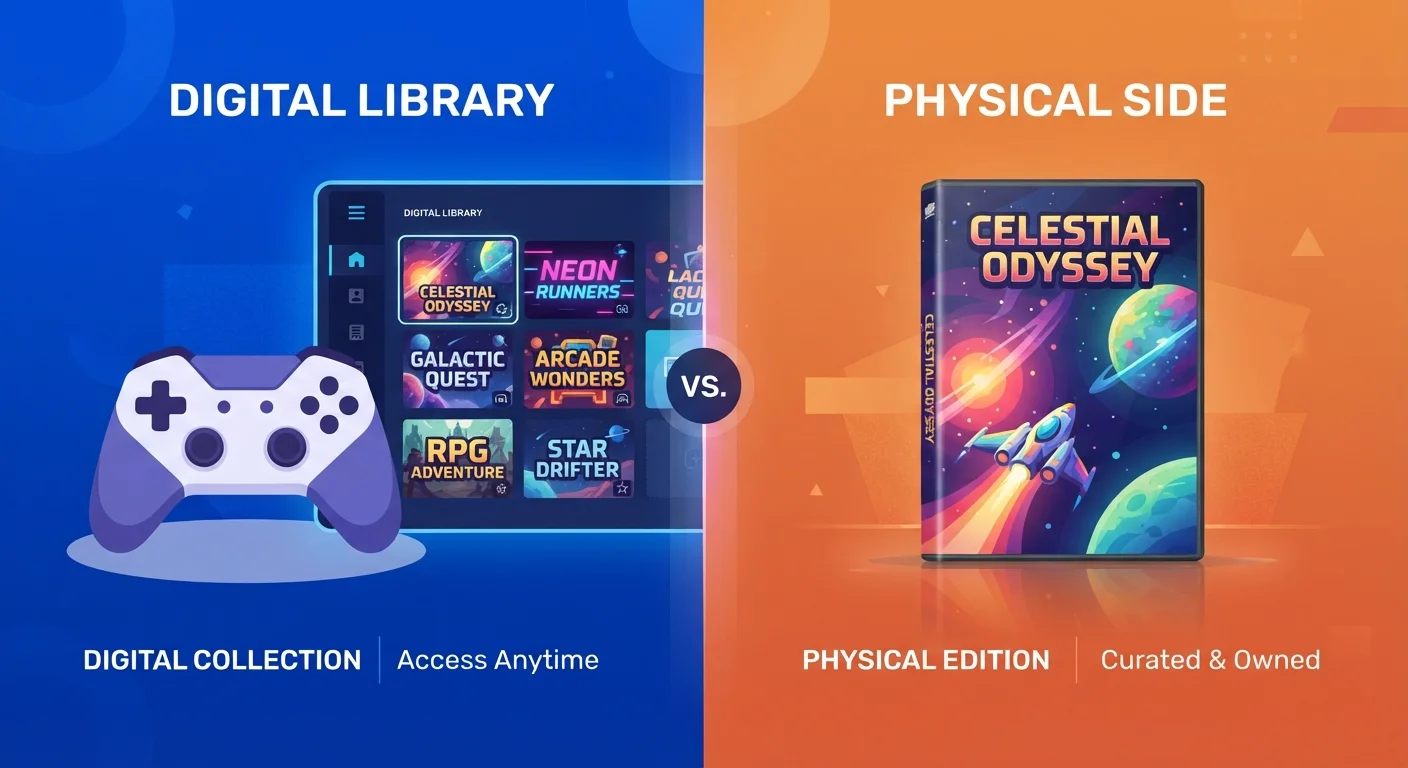
Key Takeaways
- Subscription libraries offer broad access for a flat monthly fee, but you lose access if you stop paying.
- Buying individual titles means permanent ownership, but costs more upfront per game.
- Heavy gamers who explore many genres tend to get more value from subscriptions.
- Focused players who replay favorites may do better purchasing select titles outright.
- Neither model is universally superior - your play habits are the deciding factor.
Our Verdict
Game subscription libraries and individual purchases serve different kinds of players. Subscriptions reward variety-seekers who want frequent access to a rotating catalog, while outright purchases suit those who invest deeply in a handful of titles they'll return to for years. The smartest approach may be a hybrid - subscribing during periods of exploration and buying the games that genuinely earn a permanent spot in your collection.
| Best for | Recommended |
|---|---|
| Players who try many different games each month | Subscription Library |
| Those who replay a small set of beloved titles | Individual Purchase |
| Budget-conscious gamers with limited monthly spending | Subscription Library |
| Collectors and those who value permanent ownership | Individual Purchase |
The Core Difference: Access vs. Ownership
When you buy a game outright - digitally or physically - that title is yours. You can play it years from now, lend it to a friend (with physical copies), or revisit it without paying again. A subscription library works differently: you pay a recurring fee for access to a rotating catalog of games, and the moment that subscription lapses, so does your ability to play everything in it.
That fundamental distinction shapes nearly every other trade-off between the two models. It's not simply a math problem - it's also a question of how you play, what you value, and how predictable your gaming habits are. For a broader look at how recurring fees have reshaped digital entertainment generally, see how gadget subscriptions changed the electronics landscape.
| Subscription Library | Individual Purchase | |
|---|---|---|
| Upfront cost | Low (monthly fee) | Higher per title |
| Long-term access | Requires active subscription | Permanent after purchase |
| Game variety | Wide rotating catalog | Limited to what you buy |
| Catalog stability | Titles can be removed anytime | Owned titles stay accessible |
| Best value for | Frequent, varied play | Focused, repeat play |
| Risk of overspending | Passive if underused | Only if impulsive buying |
Where Subscriptions Shine
For players who like to sample broadly - trying a new RPG one month, a puzzle game the next - subscription libraries can offer real value. Instead of paying full price to discover whether a 40-hour game is actually your thing, you can dive in and move on without financial regret. This low-friction discovery model is arguably subscriptions' strongest selling point.
Subscriptions also tend to include games across tiers, meaning an entry-level subscriber might access titles that would have cost them significantly more individually. Families with multiple players on one account can multiply that value further, since one subscription can cover everyone's access simultaneously.
Try Before You Commit to Buying
Many subscription services include day-one access to new releases for a limited window. If you're unsure whether a game suits your taste, playing it through a subscription first - then deciding whether to purchase permanently - can be a savvy middle path. It reduces both financial risk and buyer's remorse.
Where Buying Outright Has the Edge
Purchased games don't disappear when your payment does. That permanence matters for titles you'll return to repeatedly - a beloved open-world game, a go-to multiplayer favorite, or a narrative experience worth sharing with someone new. Over a long enough timeline, repeatedly subscribing just to access one frequently played game can actually cost more than a single purchase would have.
Ownership also insulates you from catalog shifts. Subscription services occasionally remove titles, and beloved games may rotate out without much notice. When you own a game, that decision is entirely out of the publisher's hands once the transaction is complete. As subscription models change the true cost of a purchase, it's worth factoring in the long-term picture - not just the monthly sticker price.
Watch Out for Catalog Removals
Subscription catalogs are not static. Games are regularly added and removed, sometimes with little advance notice. If you're mid-playthrough of a title and it leaves the service, you may lose access before finishing. For games you're deeply invested in, purchasing outright eliminates this uncertainty entirely.
Doing the Math - and Knowing Its Limits
A common approach is to tally the cost of games you'd play in a year and compare that against annual subscription fees. If you'd play 10+ titles that appear in the library, a subscription often wins on paper. If you'd realistically play two or three games you know you love and replay often, individual purchases likely make more financial sense.
But the math has limits. It assumes you'd actually play all those library titles, that those specific games stay in the catalog, and that your habits stay consistent. Gaming time is finite. Recurring subscriptions often advertise per-unit savings, but true cost depends heavily on how consistently you use them. If you're accumulating subscriptions across gaming, music, and streaming simultaneously, it's worth doing a periodic audit - auditing the digital services you're actually paying for is a practical place to start.
Making the Call for Your Setup
There's no single right answer here, and many players end up using both models in some form. A thoughtful approach might involve subscribing during periods when you have more gaming time and variety in mind, and purchasing the titles that prove they deserve a permanent place in your library.
Ask yourself a few clarifying questions: How many hours per week do you realistically game? Do you replay games or move on after finishing them? Are there specific upcoming titles not on any subscription service that you're excited about? And - honestly - how disciplined are you about canceling services when life gets busy? Tools like a structured framework for evaluating subscription value can help you stay intentional rather than just letting fees accumulate passively.
Gaming is supposed to be fun. The best model is whichever one keeps it that way without quietly draining your wallet.