

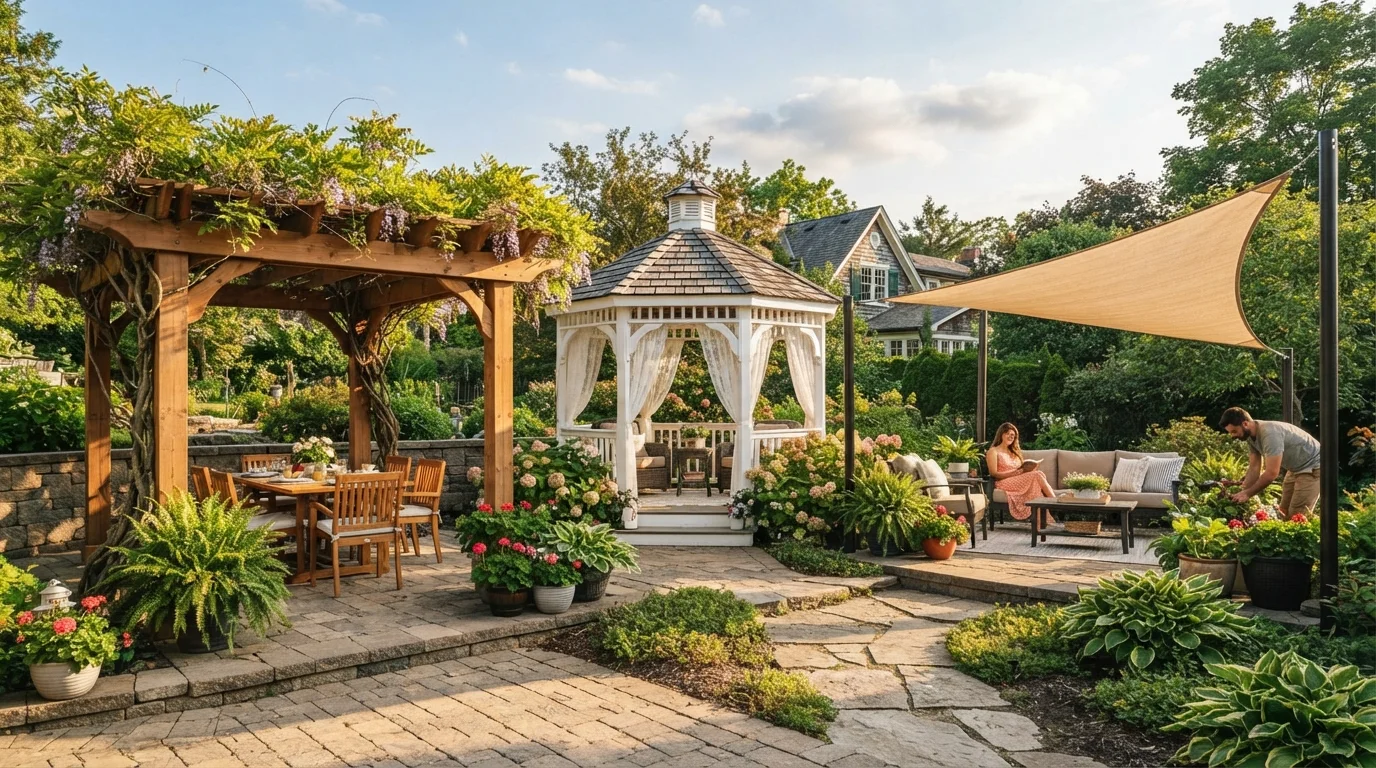
Key Takeaways
- Pergolas offer partial shade and an open framework ideal for climbing plants or string lights.
- Gazebos provide full overhead coverage and a defined, enclosed outdoor room feel.
- Shade sails are the most affordable and flexible option, but offer no structural permanence.
- Permits may be required for pergolas and gazebos depending on size and local codes.
- Your choice should reflect how you use the space, your climate, and your long-term landscaping plans.
Our Verdict
All three structures can meaningfully extend your outdoor living space, but they serve different needs. Pergolas suit homeowners who want a permanent architectural feature with partial shade; gazebos work best for those who want a fully sheltered outdoor room; shade sails are ideal for renters or those wanting a low-cost, flexible solution.
| Best for | Recommended |
|---|---|
| Homeowners wanting a permanent, attractive garden focal point | Pergola |
| Those who want full rain and sun coverage for dining or entertaining | Gazebo |
| Budget-conscious or renting homeowners needing seasonal shade | Shade Sail |
| Those integrating shade with an existing patio or deck layout | Pergola or Shade Sail |
Why the Right Structure Matters
Adding an overhead shade structure to your yard does more than block the sun - it defines how you use the space, affects property aesthetics, and in some cases triggers local building code requirements. Before committing to installation, it helps to understand what each structure actually delivers in terms of coverage, permanence, and cost.
If you're also thinking through your patio or deck layout, see how a deck or patio comparison can help you decide what surface to build on first. And for a broader view of how structures fit into your yard's design, planning hardscape and softscape together is a strong foundation.
| Pergola | Gazebo | Shade Sail | |
|---|---|---|---|
| Sun Coverage | Partial (open slats) | Full (solid roof) | High (90-95% UV block) |
| Rain Protection | Minimal unless modified | Full coverage | None |
| Permanence | Permanent | Permanent | Temporary / seasonal |
| Typical Cost Range | Moderate to high | High | Low to moderate |
| Permit Likely Required | Often yes | Usually yes | Rarely |
| DIY-Friendly | Moderate | Challenging | Yes |
| Lifespan | 15-25+ years | 20-30+ years | 5-10 years |
Pergolas: Open Framework, Big Design Impact
A pergola is an open, latticed overhead structure typically supported by four or more vertical posts. The roof consists of horizontal beams and cross-rafters - it filters light rather than blocking it entirely. This makes pergolas popular with gardeners who want to train climbing plants like wisteria or jasmine over the frame, and with homeowners who want a visually defined outdoor room without feeling closed in.
Pergolas are generally permanent structures anchored into the ground or attached to the house, which means they often require a building permit depending on their size and how they're connected to your home. Costs vary widely based on material (wood, vinyl, or aluminum) and size, but pergolas generally represent a mid-to-high investment compared to shade sails.
Boost Pergola Shade Without Losing the Look
If you love the pergola aesthetic but want more overhead coverage, consider adding a shade cloth or a retractable canopy insert between the rafters. This approach keeps the open framework visible from the sides while significantly reducing midday sun intensity. Removable options let you adjust coverage seasonally without permanent modification.
On the downside, a standard pergola won't protect you from rain. Some homeowners add a retractable canopy or polycarbonate panels to improve coverage, though this adds cost and changes the open aesthetic.
Gazebos: Full Coverage, Defined Space
A gazebo is a freestanding, fully roofed structure - typically octagonal or rectangular - with open sides or partial screen panels. Because the roof is solid, a gazebo provides complete protection from sun and rain, making it a practical choice for outdoor dining rooms or entertainment spaces used throughout the warmer months.
Gazebos are the most substantial of the three options. Permanent gazebos require a foundation (usually concrete), and most jurisdictions require a building permit for structures of this type. Outdoor structures that typically require a permit is worth reviewing before you finalize plans. Pre-fabricated kits are available and easier to install than custom builds, but even kit gazebos are a significant weekend project. Budget accordingly for both materials and labor if you're hiring out the work.
Shade Sails: Flexible, Affordable, Temporary
A shade sail is a tensioned fabric panel - usually triangle or rectangle - stretched between anchor points such as posts, trees, or wall hooks. They're the most affordable entry point and can be taken down seasonally or repositioned as needed. Quality shade cloth typically blocks 90-95% of UV rays while still allowing some airflow, keeping the area cooler than a solid roof might.
Installation is DIY-friendly for most configurations: you need sturdy anchor points and a bit of geometry to get the tension right. Shade sails don't require permits in most jurisdictions and don't alter your property permanently, which makes them a practical choice for renters or homeowners not yet ready for a long-term commitment. The trade-off is durability - fabric degrades over time with UV exposure and high winds, and most shade sails need replacement every five to ten years depending on quality and climate.
When planning the overall layout of your outdoor area, consider pairing a shade sail with thoughtful flooring underneath. See outdoor flooring options for patios and covered porches for guidance on what surfaces hold up best in exposed conditions.
Anchor Points Must Handle the Load
Shade sails put significant lateral tension on their anchor points, especially in windy conditions. Posts driven too shallowly or hooks mounted into weak siding can fail and cause injury or property damage. Always install anchors into solid structural material - concrete footings for posts, or wall studs and masonry for wall-mounted hardware - and follow the manufacturer's load specifications.
Making the Final Call
The right structure depends on four core factors: how much shade you actually need, whether you want something permanent, your budget, and what your local codes allow. A pergola is the sweet spot for homeowners who want a lasting landscape feature with partial coverage. A gazebo is the go-to if full weather protection is the priority. A shade sail wins on flexibility and price, especially for smaller spaces or temporary setups.
Whatever you choose, check with your local building department before starting. Even structures that seem minor can require permits, setback compliance, or HOA approval. Getting this right before installation saves costly rework later.