

Key Takeaways
- A blend of topsoil, compost, and coarse material creates the ideal raised bed growing medium.
- Beds no wider than 4 feet allow easy access from both sides without stepping on the soil.
- Orient beds along a north-south axis to maximize sun exposure across all plants.
- Taller beds (10-12 inches deep) suit most vegetables and prevent compaction.
- Spacing plants for airflow reduces disease pressure and improves yields.
- Testing soil pH helps you adjust nutrients before problems appear.
Start here
Why Raised Beds Work So Well
Core skill
Choosing the Right Soil Mix
Next
Sizing Your Bed for Reach and Productivity
Then
Layout Principles: Sun, Spacing, and Airflow
Finish strong
Common First-Timer Mistakes to Avoid
Why Raised Beds Work So Well
Raised garden beds give you direct control over the growing environment in a way that in-ground planting rarely allows. You fill them with a soil mix you choose, so you're not fighting clay, compaction, or rocky native ground. Drainage improves significantly because water moves freely through a well-blended fill rather than pooling in dense subsoil. Soil also warms faster in spring, extending your growing season at both ends.
For homeowners thinking about the yard as an extension of livable space, a raised bed is one of the most practical upgrades you can make. It fits neatly into a broader landscaping plan-see how landscaping functions as a home improvement beyond aesthetics. Beds are also kinder on the back, since you can set them at a height that reduces bending.
Topsoil
The uppermost layer of natural soil, rich in minerals and organic matter, used as a structural base in raised bed blends.
Compost
Decomposed organic material-kitchen scraps, leaves, plant matter-that adds nutrients and beneficial microorganisms to soil.
Perlite
A lightweight volcanic mineral added to soil mixes to improve drainage and prevent compaction.
Soil pH
A measure of how acidic or alkaline your soil is, which directly affects whether plants can absorb available nutrients.
Square-foot gardening
A planting method that divides a bed into a grid of one-foot squares, with a set number of plants assigned to each square based on their mature size.
Top-dressing
Applying a thin layer of compost or other amendment to the surface of an established bed each season to replenish nutrients without disturbing roots.
Choosing the Right Soil Mix
The fill you choose is the single most important decision you'll make for a raised bed. A commonly recommended blend uses roughly equal thirds of topsoil, mature compost, and a coarse material such as perlite, aged wood chips, or coarse sand. Topsoil provides mineral structure; compost contributes nutrients and microbial life; the coarse component keeps the mix from compacting over time.
Avoid filling a bed with straight potting mix-it's too light and dries out rapidly. Equally, native garden soil used alone tends to compact into a dense mass that roots struggle to penetrate. Start with a good blend, then top-dress with an inch of compost each season to replenish what plants consume. If your plants show signs of deficiency or poor growth, testing the soil's pH is a smart next step-our guide on soil pH and how to adjust it explains what to look for and which amendments help.
Producing your own compost significantly reduces long-term costs. Backyard composting fundamentals covers the basics of turning kitchen and yard scraps into a steady supply of amendment material.
Refresh Soil Each Season
Raised bed soil breaks down and shrinks over time as organic matter decomposes. Plan to top-dress with one to two inches of compost each spring before planting. This simple habit maintains soil structure and nutrients without a full bed refill.
Sizing Your Bed for Reach and Productivity
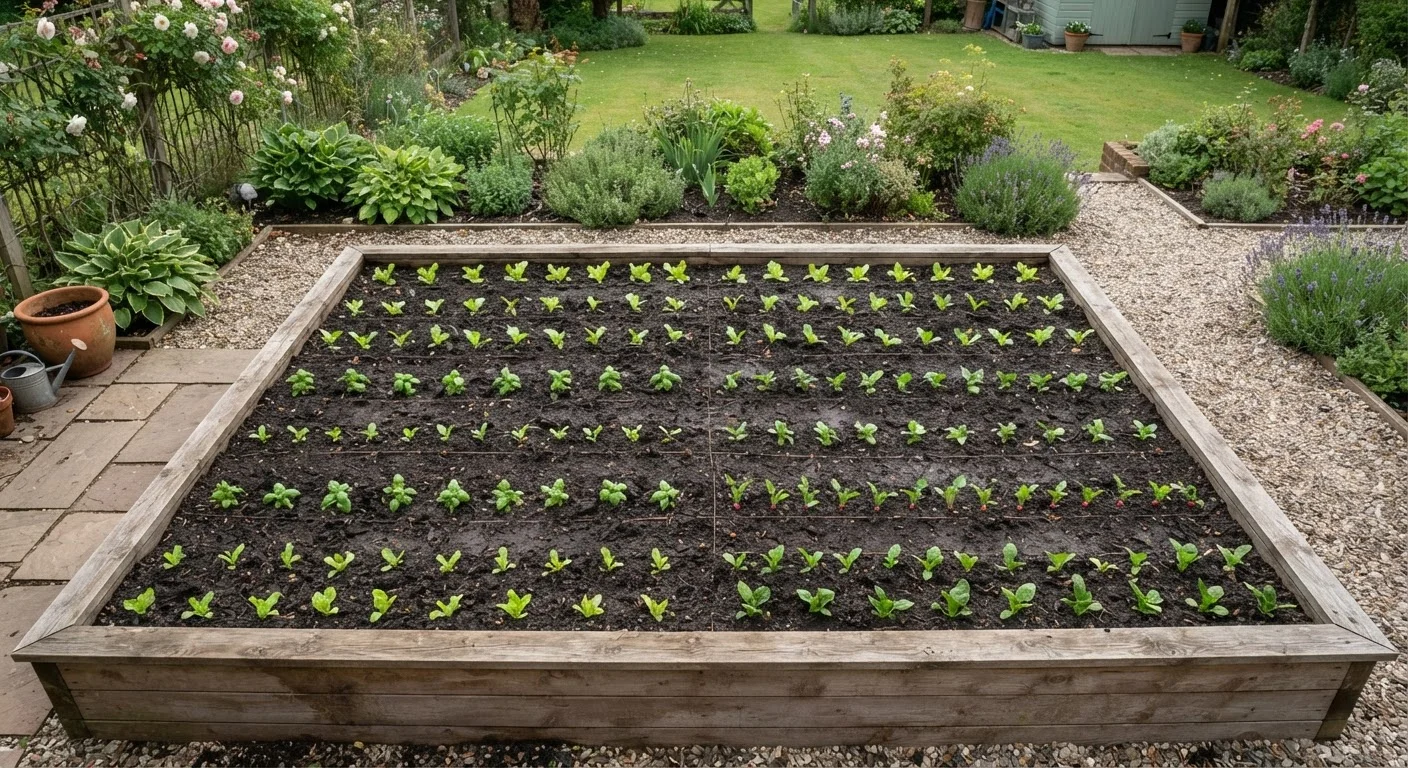
Width is the dimension most beginners underestimate. A bed wider than 4 feet means you'll be stepping into it to reach the center-and foot traffic compacts soil, defeating one of the main advantages of raised growing. Four feet works well when you can walk around all sides; limit width to 2 feet for any bed placed against a structure.
Length is flexible, but beds longer than 8 feet can become awkward to walk around. Many gardeners find two 4×8-foot beds more practical than one large continuous bed, since the path between them provides easy access and doubles as a working aisle.
For depth, most vegetable crops perform well at 10 to 12 inches. Root crops-carrots, beets, parsnips-benefit from 14 to 18 inches of loose soil. If you're building on a hard surface like a patio or over shallow rocky ground, deeper beds (12 inches or more) become especially important since roots have nowhere else to go.
Don't Build Over Drainage Problems
Placing a raised bed in a spot where water pools after rain can waterlog roots even in a well-draining fill mix. Resolve underlying yard drainage issues before installing permanent beds. Our guide on grading and drainage explains how slope and site prep affect water movement.
Layout Principles: Sun, Spacing, and Airflow
Orienting beds along a north-south axis helps ensure that taller plants on the north end don't shade shorter ones throughout the day. Most fruiting vegetables need six to eight hours of direct sun, so observe your yard across a full day before committing to a location.
Within the bed, spacing matters more than many beginners expect. Crowded plants compete for light and moisture, and poor airflow between leaves creates conditions that favor fungal diseases. Follow the spacing guidelines on seed packets or transplant labels-they exist for practical reasons, not to waste space. Using a square-foot planting approach (dividing the bed into a grid and assigning specific plant counts to each square) can help beginners visualize spacing without guesswork.
Tall plants like tomatoes or pole beans belong on the north side of the bed. Medium crops like peppers and kale go in the middle. Low-growing herbs and greens fit along the sunny south edge. This tiered approach keeps all plants productive without shading neighbors. Once beds are established, a layer of mulch between plants helps retain moisture and suppress weeds-our article on mulching depth and material types covers the most effective approaches.
Common First-Timer Mistakes to Avoid
Filling a bed and planting the same day is tempting but often counterproductive. Give a fresh soil blend a few days to settle and, if possible, water it once before planting so you can see how it drains and whether it needs adjusting.
Skipping the base layer is another frequent oversight. Laying cardboard directly on the ground before filling suppresses grass and weeds without chemicals, and it breaks down within a growing season into organic matter. Avoid landscape fabric under a raised bed-it restricts earthworms and drainage over time.
Finally, don't neglect the perimeter. Grass and weeds will try to creep in from the sides. Clean edging techniques make maintenance easier across the whole season and keep the bed looking intentional rather than overgrown.
A raised bed is a long-term investment in your outdoor space. Build it right the first time-choosing the correct fill, sizing it for real-world access, and locating it for adequate sun-and it will reward you with productive harvests and far fewer maintenance headaches year after year.