

Key Takeaways
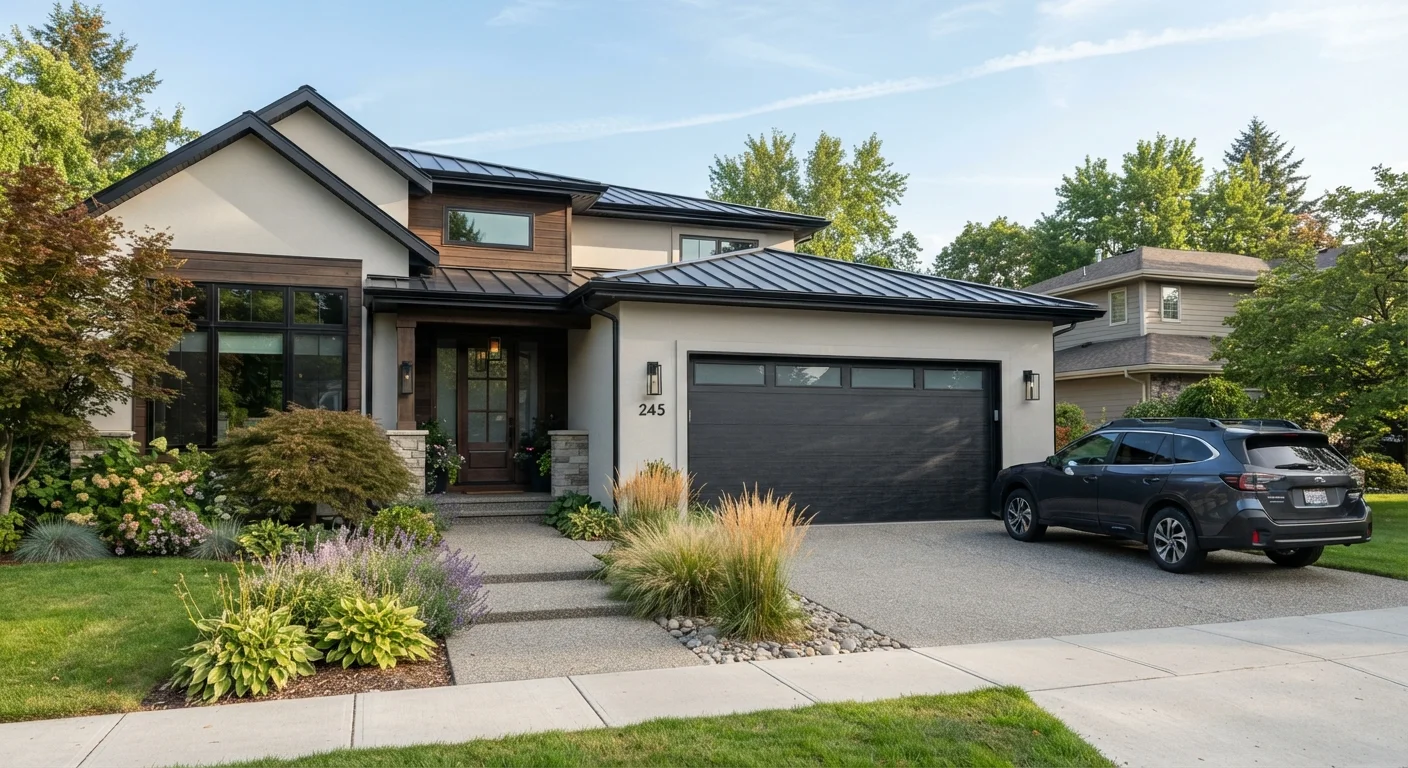
- A garage door can cover up to one-third of a home's front facade, making replacement highly visible.
- Garage door replacement consistently ranks among the highest-return exterior projects in remodeling cost analyses.
- Material choice - steel, wood, composite, aluminum - affects appearance, maintenance, and insulation performance.
- An insulated garage door can improve temperature control in attached garages and adjacent living spaces.
- Professional installation is strongly recommended due to spring tension hazards and structural alignment requirements.
Garage Door Replacement
Garage door replacement is the process of removing an existing garage door and installing a new one - typically including new panels, hardware, and sometimes a new opener system. It's one of the few exterior upgrades that affects both the appearance and function of a home simultaneously. Because a garage door can occupy up to a third of a home's front-facing wall, the visual impact is immediate and significant.
Modern garage doors are rated for wind resistance, insulation value (measured in R-value), and cycle life - factors that vary widely by material and construction method.
Why Garage Door Replacement Gets Overlooked - and Why It Shouldn't
Homeowners planning exterior upgrades often gravitate toward landscaping, painting, or window replacement before considering the garage door. Yet on many homes - especially those built with attached two-car garages - the door is the single largest visual element on the front of the house.
When a door is dented, faded, or stylistically outdated, it drags down the overall impression of the home. Replacing it addresses that instantly. For context, the Remodeling Cost vs. Value report has historically placed garage door replacement near the top of projects that return a high percentage of their cost at resale - often higher than kitchen remodels or bathroom additions.
This doesn't mean replacement is always the right move. If a door is structurally sound and in good condition, targeted repairs may suffice. See our guide on common garage door problems to help distinguish repair situations from replacement ones.
~30%
Facade area a garage door may cover
On homes with front-facing attached garages, the door can occupy roughly a third of the visible exterior wall, according to architectural design guidelines.
~94%
Average cost recouped at resale
Remodeling Magazine's Cost vs. Value report has repeatedly shown garage door replacement among the highest-returning exterior projects, often recouping around 94% of project cost.
20-30 years
Typical lifespan of a steel garage door
With routine maintenance, a quality steel door generally lasts two to three decades under normal residential use conditions.
Choosing the Right Door: Material, Style, and Insulation
Garage doors come in four main materials, each with distinct characteristics:
- Steel: Durable, widely available, and relatively low-maintenance. Can dent, but many modern panels are reinforced. Accepts paint and comes pre-finished in many colors.
- Wood: Classic appearance, highly customizable. Requires periodic sealing or painting to prevent warping and rot, especially in wet climates.
- Composite: Engineered to mimic wood grain while resisting moisture. Lower maintenance than real wood with similar aesthetics.
- Aluminum: Lightweight and rust-resistant. Common in contemporary architectural styles; tends to dent more easily than steel.
Style choices - raised panel, carriage house, flush, glass-panel - should complement your home's existing architecture. A modern flush door can look jarring on a traditional colonial home, just as an ornate carriage house door may feel out of place on a mid-century modern.
Insulation is worth careful consideration. Doors are rated by R-value, a measure of thermal resistance - the higher the number, the better the insulation. If your garage is attached to your living space or sits below a bedroom, an insulated door helps reduce temperature swings. For fully detached garages, the energy benefit is more limited. This concept is similar to how attic insulation works - it's about reducing heat transfer at a building boundary.
Match the Door to Your Home's Architecture
Before choosing a style, photograph your home's front elevation and compare it against door style options. A carriage-house door suits traditional and craftsman homes well; flush or aluminum-frame doors align naturally with contemporary designs. Mismatched styles can undermine the visual benefit of a new door entirely.
The Installation Process and Why Professional Help Matters
Garage door replacement is not a simple swap. The process typically involves removing the old door panels and hardware, checking and potentially replacing the track system, installing new panels, and tensioning springs - either torsion springs (mounted above the door) or extension springs (running along the sides).
Spring tensioning is the step that makes this project genuinely hazardous for most homeowners. Torsion springs are wound under significant mechanical stress. Improper handling can result in serious injury. Most home improvement professionals and safety organizations recommend leaving spring work to licensed garage door technicians.
Beyond safety, proper installation affects how the door operates over its lifetime. Misaligned tracks cause uneven wear, premature cable failure, and noise. A professional installer has the tools and training to ensure the door opens level, seals fully at the bottom, and operates smoothly within the opener's load capacity.
Before scheduling installation, verify whether your municipality requires a permit. Like other exterior modifications, requirements vary - your local building department is the right starting point. You might also review how this project compares to other high-impact exterior upgrades in our article on curb appeal improvements.
How Garage Door Replacement Fits Into a Broader Home Strategy
Exterior upgrades work best when they're coordinated. A striking new garage door will have more lasting impact when paired with fresh paint, clean landscaping, and functional lighting - improvements that compound rather than compete with each other.
If you're weighing multiple exterior projects, consider which ones address both aesthetics and function simultaneously. Garage door replacement does both: it improves appearance while also potentially upgrading security, insulation, and operational reliability. By contrast, a project like window replacement involves a more complex cost-benefit calculation, where payback timelines vary considerably based on window type and climate.
Replacement isn't the only path. If your garage door is fundamentally sound - no structural damage, good insulation - cosmetic updates like repainting, replacing decorative hardware, or installing new weatherstripping can meaningfully refresh its appearance at far lower cost. The goal is making a considered decision based on your door's actual condition, your home's needs, and your budget - not simply defaulting to the most dramatic option.
This article is for informational purposes only. Always consult qualified, licensed professionals before undertaking structural or mechanical home improvement projects, and verify local permitting requirements with your municipality.