

Key Takeaways
- Asphalt shingles become brittle in cold temperatures and can crack under foot traffic or bending.
- Roofing adhesives and sealants lose effectiveness below manufacturer-specified temperature thresholds.
- Emergency temporary repairs are often the right call in winter - full fixes can follow in spring.
- Ice dams, not just storm damage, are a common driver of winter roof problems.
- Safety risks increase significantly on cold, frost-covered, or snow-laden roofs.
- A licensed roofing contractor should handle most cold-weather repairs involving structural or flashing issues.
Cold-Weather Roof Repair
Cold-weather roof repair refers to any patching, sealing, or shingle work performed when outdoor temperatures are at or near freezing. Unlike warm-weather repairs, cold conditions affect how roofing materials behave, how adhesives bond, and how safely a crew or homeowner can work on a sloped surface. Understanding these differences helps you decide what can wait, what needs immediate attention, and when to call a professional.
Most asphalt shingle manufacturers specify an installation temperature range - commonly above 40°F (4°C) - because the self-sealing strips on shingles require heat to activate properly. Repairs made outside these thresholds may not meet product warranty requirements.
Why Cold Weather Changes the Rules for Roof Repairs
A repair that takes a few hours in July can become a complicated, higher-risk task in January. Temperature doesn't just affect your comfort on the roof - it directly changes how the materials you're working with behave. Two factors drive most of the cold-weather complications: material brittleness and adhesive performance.
Asphalt shingles, the most common residential roofing material in the U.S., contain petroleum-derived compounds that keep them flexible at normal temperatures. Below about 40°F, those compounds stiffen. A shingle that flexes easily in summer becomes rigid and fragile in winter. Nailing, cutting, or walking on brittle shingles can crack them - sometimes creating new damage in the course of attempting a repair.
Adhesive performance is the second major concern. Self-sealing shingle strips, roofing cement, and sealants all rely on temperature to activate or cure correctly. Apply them too cold, and they may not bond at all - leaving repaired sections vulnerable to wind lift or water infiltration. See our guide to roof failure warning signs for context on why addressing even small vulnerabilities matters.
Warm the Sealant, Not the Roof
If you need to apply roofing sealant in cold conditions, store the tube or cartridge indoors until the last moment before use. Keeping the product at room temperature improves flow and adhesion even when the outdoor temperature is borderline. Always check the manufacturer's minimum application temperature printed on the label before proceeding.
Ice Dams: A Uniquely Winter Problem
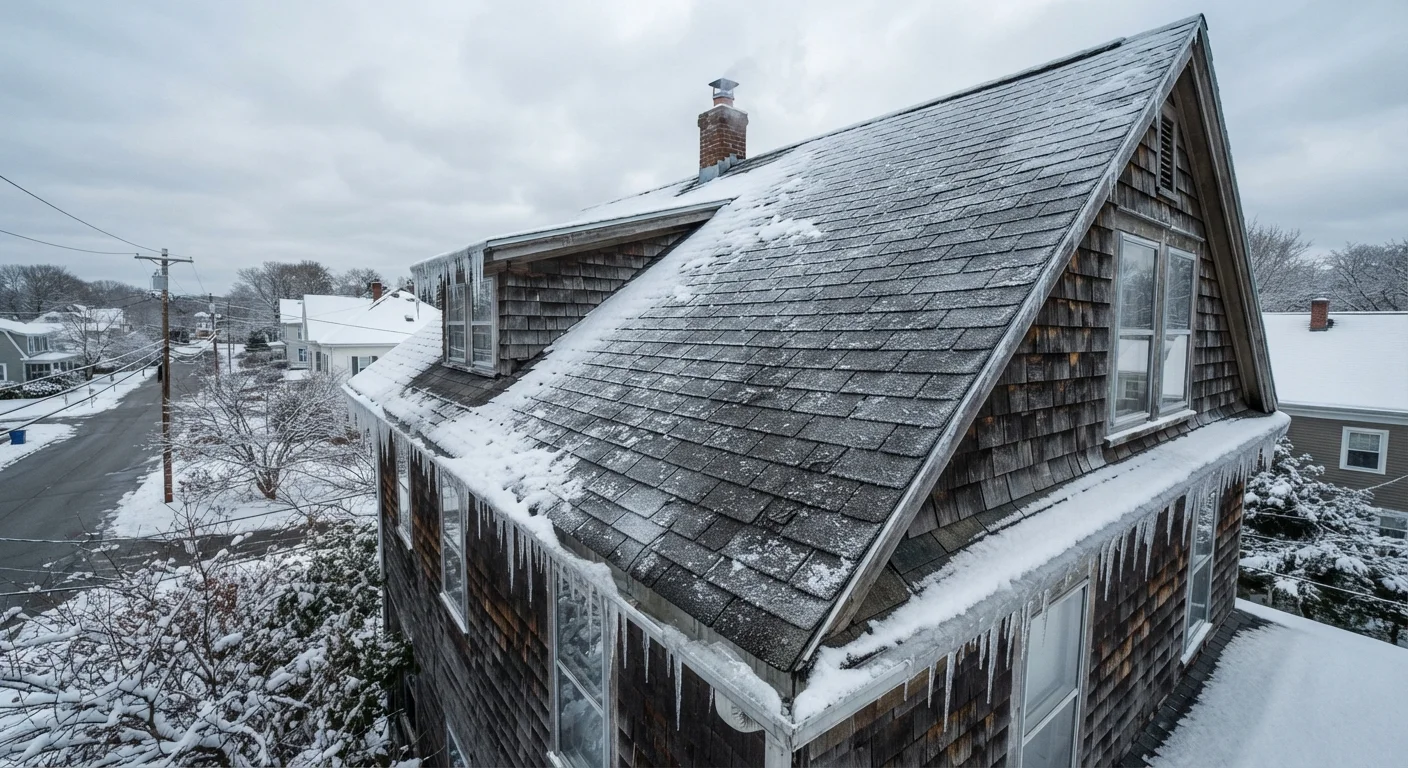
Cold-weather roof damage isn't always caused by storms. Ice dams are a common winter culprit that catch many homeowners off guard. They form when warm air escaping from the living space heats the roof deck unevenly. Snow near the ridge melts, runs down toward the eaves - which are colder because they extend past the house's heated envelope - and refreezes. Over time, this buildup creates a ridge of ice that blocks drainage.
Trapped meltwater has nowhere to go except under the shingles. This is how many winter leaks begin: not from missing material, but from water being forced backward through the roof assembly. Reviewing your attic's thermal performance is often part of the long-term solution - see understanding R-value before repairing insulation for more on that angle.
Permits and Professional Requirements Vary by Locality
Some jurisdictions require permits for roof repairs that go beyond simple patching, particularly if structural decking or flashing is involved. Requirements vary widely by state and municipality. Before beginning any non-emergency repair, check with your local building department to understand what applies in your area.
Ice dam removal itself carries risk. Using a flat shovel or roof rake from ground level to clear snow near eaves is generally safer than going onto the roof. Hacking at ice with sharp tools can damage shingles further. If ice buildup is severe, a roofing or weatherization contractor can assess the situation safely.
Temporary Fixes vs. Permanent Repairs in Winter
When a roof is actively leaking in January, waiting until spring isn't always an option - but attempting a full repair in sub-freezing conditions isn't always advisable either. The practical middle ground is a well-executed temporary repair that limits further water intrusion until conditions allow proper work.
A heavy-duty polyethylene tarp, properly secured over the damaged section, can hold up for weeks or months when weighted and anchored without direct penetration into the roof deck. For smaller breaches - around flashing, at pipe boots, or along valleys - cold-weather patching membranes or specialized low-temperature sealants can bridge the gap. Note that these are not permanent solutions, and the area will need professional assessment when temperatures rise.
For a broader view of what seasonal repairs to prioritize throughout the year, the seasonal home repair checklist offers a useful framework. And before investing in other home upgrades, keep in mind that roof integrity should be addressed first.
40°F
Minimum temperature for shingle adhesive activation
Most asphalt shingle manufacturers specify 40°F (4°C) as the lower threshold for proper self-sealing strip bonding during installation or repair.
~25%
Share of home insurance claims tied to water and freezing
Water damage and freezing-related claims, including roof-related incidents, represent a significant portion of homeowner insurance losses each winter according to industry data.
Safety on a Cold Roof: What Every Homeowner Should Know
Even experienced roofers treat cold-weather conditions with heightened caution. Frost, ice, and wet debris dramatically reduce traction on any slope. A roof that feels manageable in dry fall weather can be genuinely dangerous after a freeze. If you're not equipped with appropriate footwear, a safety harness, and a solid anchor point, stay off the roof.
Beyond personal safety, there's a practical concern: walking on cold shingles can damage them. The brittleness discussed earlier means foot pressure that shingles would easily absorb in warmer months can cause surface cracking in winter. Any roof-level inspection or repair in cold conditions should be limited to what's truly necessary.
Flashing is a frequent source of winter leaks that often doesn't require going fully onto the roof to identify from the ground or attic. See our overview of flashing as a source of water damage for what to look for. When in doubt, a licensed roofing contractor should assess and perform any cold-weather repairs involving structural components, flashing, or widespread shingle damage. Their expertise - and appropriate equipment - reduces both personal risk and the chance of compounding the original problem.
“The roof is the first line of defense for everything below it. A small, unaddressed failure in winter rarely stays small - water finds its way, and cold temperatures slow the discovery of where it's going.”
— Home Editorial Team, Editorial Staff, Home Improvements