

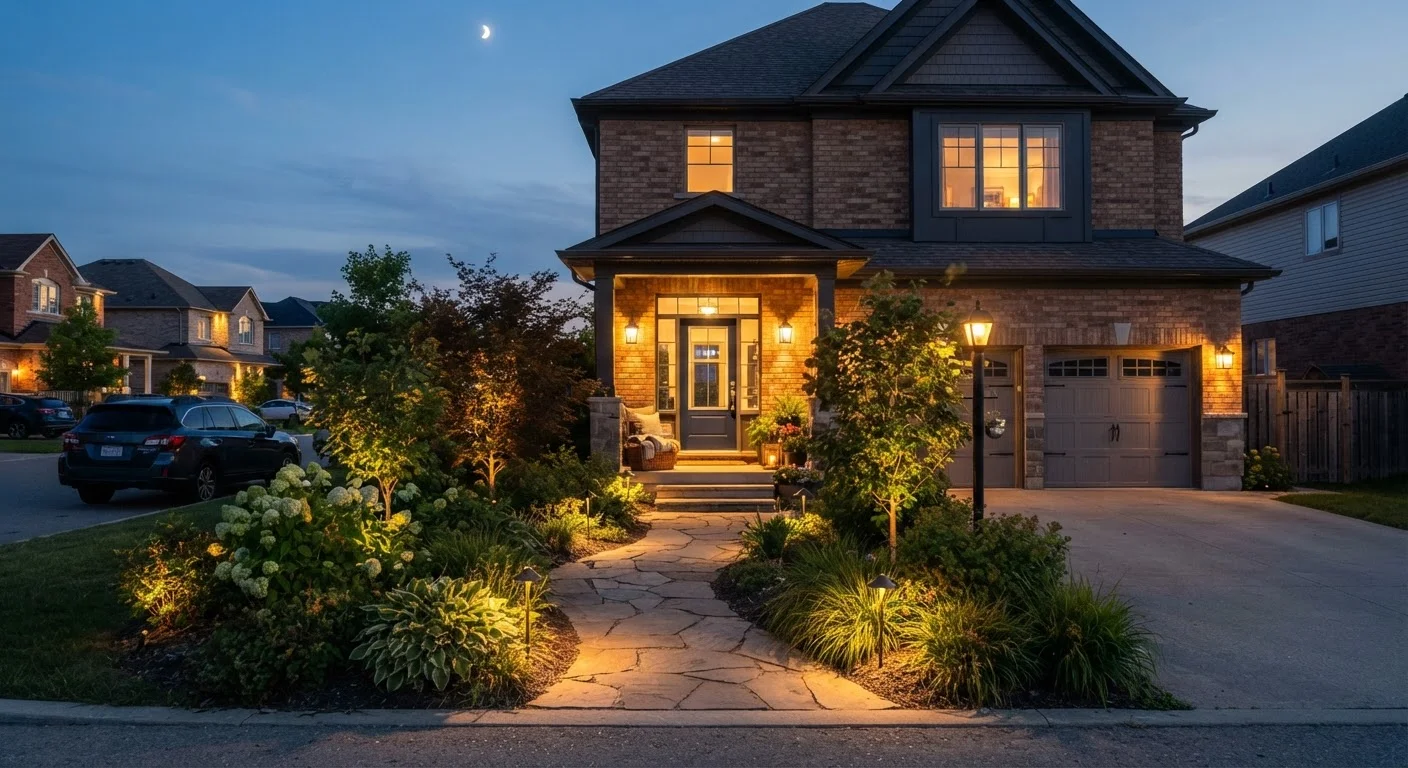
Key Takeaways
- Layer safety, accent, and ambient lighting zones to serve different outdoor functions effectively.
- LED fixtures and low-voltage systems significantly reduce long-term energy costs outdoors.
- Motion sensors, timers, and smart controls let you manage security and energy use together.
- Fixture placement matters as much as fixture type - avoid glare and dark gaps near entry points.
- Some electrical work, including new circuit installation, requires a licensed electrician and permits.
Why Outdoor Lighting Deserves a Thoughtful Plan
Exterior lighting serves three overlapping roles: keeping the property safe, creating curb appeal, and managing energy consumption. Most homeowners address these goals separately - adding a motion-sensor floodlight here, a decorative lantern there - but a coordinated approach delivers far better results with less waste.
Before purchasing any fixture, walk your property after dark and note where guests might trip, where entry points feel dim, and where landscape features you enjoy during the day disappear at night. That audit forms the foundation of a practical lighting plan. For a broader look at how lighting fits into exterior improvements, see our guide to exterior curb appeal upgrades.
“Good outdoor lighting is not about flooding the yard with brightness - it's about putting the right amount of light in the right places so people feel safe and the landscape looks intentional.”
— Landscape Lighting Industry Advisory, General guidance from professional landscape lighting practitioners
The Three Lighting Zones to Plan For
Professional lighting designers typically organize outdoor spaces into three functional layers, and this framework is just as useful for homeowners.
- Safety and task lighting covers pathways, steps, driveways, and entry doors. The goal is adequate, even illumination that prevents falls and allows you to see clearly at night. Pathway fixtures, step lights, and porch fixtures fall here.
- Security lighting focuses on deterring unauthorized access. Motion-activated floodlights near garage doors, side gates, and back entries are the most common approach. Aim fixtures downward to reduce glare and light-trespass onto neighboring properties.
- Accent and ambient lighting includes uplighting for trees, in-ground lights in garden beds, and string lights over patios. These serve aesthetics and atmosphere rather than navigation.
For detailed placement guidance on all three zones, the outdoor lighting layouts article walks through spacing, wiring basics, and low-voltage options step by step.
Layer fixture types rather than relying on a single light source for the whole yard.
A single bright floodlight creates harsh shadows and leaves surrounding areas in darkness. Layering pathway, accent, and security fixtures produces even coverage and eliminates the contrast that makes dark spots feel unsafe.
Choose fixtures rated for outdoor use with an appropriate IP (Ingress Protection) rating for your climate.
Fixtures not rated for moisture exposure corrode quickly and can become electrical hazards. An IP65 rating, for example, means the fixture is dust-tight and protected against water jets - suitable for most US climates.
Aim fixtures to direct light downward and away from neighboring properties and the street.
Light trespass - unwanted light spilling onto neighboring lots - is a common source of neighbor disputes and can violate local ordinances. Downward-directed fixtures also reduce glare, which actually improves visibility rather than diminishing it.
Use motion sensors and timers together to reduce unnecessary runtime on security fixtures.
Security lights that burn all night consume energy without improving deterrence. Motion activation draws attention to movement when it happens, which is arguably more effective than constant illumination that neighbors learn to ignore.
Plan cable and conduit routes before purchasing fixtures to avoid mismatched systems.
Low-voltage and line-voltage systems use different hardware and installation methods. Mixing them or retrofitting cable runs after fixtures are placed leads to visible workarounds and added cost.
Energy and Control Options Worth Understanding
LED technology has made outdoor lighting far more efficient than it was even a decade ago. A typical LED landscape fixture uses 75-80% less energy than an equivalent incandescent bulb and lasts significantly longer, reducing both operating costs and replacement trips. If you're unfamiliar with terms like lumens, color temperature, or IP ratings (which indicate weather resistance), our home lighting upgrade glossary defines them plainly.
75-80%
Energy savings: LED vs. incandescent outdoor fixtures
According to the U.S. Department of Energy, LED lighting uses significantly less energy than traditional incandescent sources while delivering comparable or better light output.
25,000+
Typical LED bulb lifespan in hours
The U.S. Department of Energy notes that quality LED products can last 25 times longer than incandescent bulbs, reducing outdoor fixture maintenance frequency considerably.
Controls are where many homeowners leave meaningful savings on the table. Timers, photocell sensors (which switch lights on at dusk and off at dawn automatically), motion detectors, and smart-home integrations each serve different needs. Combining a photocell with a motion sensor on a security fixture, for example, keeps the light off during the day, dims it at night, and brightens it fully only when motion is detected - cutting runtime substantially.
Installation Considerations and When to Call a Pro
Low-voltage landscape systems (typically 12V) are designed with DIY installation in mind. They run off a plug-in transformer and use cable that can be buried shallowly or left under mulch. Swapping an existing wall-mounted fixture for a new one of the same type is also generally straightforward for a homeowner comfortable with basic electrical work - always shut off the circuit at the breaker before touching any wiring.
Low-Voltage vs. Line-Voltage Systems
Low-voltage landscape systems run at 12V via a plug-in transformer and are generally safe for homeowner installation. Line-voltage systems operate at 120V and carry the same risks as any household electrical work. If you're unsure which type a project requires, consult a licensed electrician before starting. Always verify local permit requirements with your municipality before adding new circuits or buried wiring.
Line-voltage work (standard 120V) is a different matter. Adding new outdoor circuits, installing in-ground conduit runs, or placing receptacles on exterior walls typically requires a permit and must be done by a licensed electrician in most jurisdictions. This is not just a legal formality - outdoor wiring is exposed to moisture and physical damage, and improper installation creates real fire and shock hazards. When in doubt, hire a qualified professional and ask your local building department what permits apply.
Outdoor lighting also pairs naturally with other yard improvements. If you're planning a patio fire feature alongside your lighting upgrade, review the fire pit safety and siting guide to coordinate placement and keep both projects code-compliant.