

Key Takeaways
- Price anchoring uses a high reference number to make a sale price feel like a bigger saving than it may be.
- Charm pricing (e.g., $9.99 vs. $10) exploits how people process numbers from left to right.
- Bundling can obscure per-item costs, making it harder to evaluate whether each component is worth paying for.
- Urgency and scarcity signals amplify anchoring effects by compressing the time you have to think critically.
- Knowing your own price ceiling before you shop is the most reliable defense against anchoring.
Price Anchoring
Price anchoring is a retail and marketing technique where an initial price - often a higher 'original' or 'compare at' figure - is displayed alongside a sale price to make the discount appear more significant. The first number you see sets a mental reference point that shapes how you judge every price that follows. It's one of several tactics retailers use to influence perceived value before you've had a chance to assess it independently.
Anchoring is rooted in cognitive bias research, notably from behavioral economists Daniel Kahneman and Amos Tversky, who demonstrated that people rely heavily on the first piece of numerical information they encounter when making subsequent judgments.
How Anchoring Actually Works on Your Brain
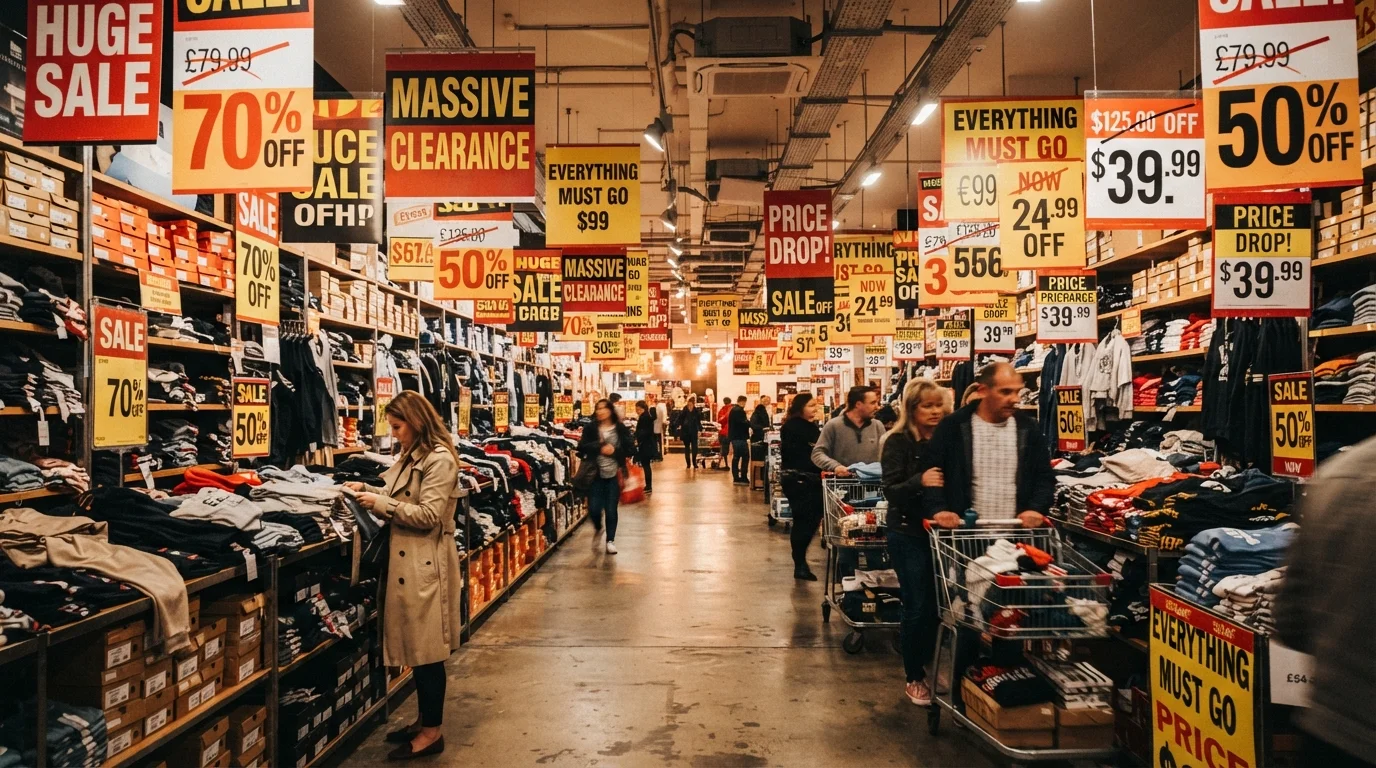
When a retailer shows you a price crossed out in red with a lower figure beside it, your brain doesn't evaluate the sale price in isolation. It evaluates it relative to the first number it saw. That's anchoring: the original figure becomes a cognitive reference point, and the gap between it and the sale price feels like your gain.
The anchor doesn't even need to be accurate to be effective. Studies in behavioral economics show that exposure to a high number - even an arbitrary one - nudges people toward higher estimates and willingness to pay. In a retail context, a 'was $120, now $79' tag isn't just information; it's a framing device.
For a deeper look at how retailers construct these markdown sequences from the start, see how retailers plan and price markdowns.
“The reference point matters enormously. People don't evaluate outcomes in absolute terms; they evaluate them relative to a reference point, and that reference point can be manipulated.”
— Richard Thaler, Nobel laureate in Economic Sciences, author of 'Misbehaving'
Charm Pricing and Decoy Pricing: The Supporting Cast
Anchoring rarely operates alone. Two companion tactics appear so consistently that most shoppers no longer consciously register them.
Charm pricing is the practice of ending a price in .99, .95, or .97 rather than a round number. Because people read numbers left to right, $49.99 feels closer to $49 than to $50 - even though the difference from $50 is a single penny. Retailers have used this since the late 19th century, and consumer research continues to confirm it influences perception. For a full breakdown of what those digits on shelf tags signal, decoding retail price tag signals covers the details.
Decoy pricing introduces a third, strategically inferior option to make the retailer's preferred choice look more attractive by comparison. Classic example: a small coffee for $3, a large for $6, and a medium for $5.50. The medium serves as a decoy - the large suddenly looks like better value, even if you came in wanting the small.
~60%
Shoppers influenced by charm pricing
Consumer behavior research consistently estimates that a majority of shoppers perceive .99-ending prices as significantly lower than the next round dollar, despite the minimal actual difference.
3x
Anchor effect on perceived value
Behavioral economics research has shown that irrelevant high anchor numbers can inflate a person's willingness-to-pay estimate by as much as three times compared to seeing no anchor at all.
Bundling: When Convenience Obscures Cost
Bundling groups multiple products or services into a single price point. It can offer genuine efficiency - particularly for consumables you'd buy anyway. But it also makes it harder to assess whether you're actually paying a fair price for each component.
A bundle priced at $89 for three items feels like a deal if you assume each piece has equal value. But if one item is a slow-moving product the retailer is trying to move, the bundle may be serving their inventory needs more than yours.
The question worth asking: would you buy each item in this bundle separately, at the implied per-unit price? If the answer is no for any component, the bundle may not be serving you. How to evaluate whether a bundle adds genuine value goes into more detail on this framework.
Ask the Per-Item Question First
Before accepting a bundle's stated value, mentally price out each component on its own. If you wouldn't buy one of the bundled items at its implied standalone price, the bundle is probably not saving you money - it's just packaging something you didn't need alongside something you did.
Building a Defense: Think Before You See the Price
The most reliable counter to anchoring and related tactics isn't skepticism in the moment - it's a prior commitment. Decide what you'd reasonably pay for a product category before you encounter a retailer's framing. That self-set ceiling becomes your anchor, and the retailer's crossed-out figure loses much of its power.
Other practical approaches:
- Track prices over time rather than comparing a sale price to the listed original. Price history tools exist for most major e-commerce platforms.
- Use unit pricing when comparing packaged goods. Unit price displays make size comparisons straightforward - yet most shoppers skip them.
- Separate urgency from value. Countdown timers and low-stock warnings often amplify anchoring effects by narrowing the window you have to think. How urgency tactics work in retail explains the mechanics.
Consistent habits matter more than one-time vigilance. Low-effort pricing habits worth building into your routine offers a practical starting point.
Anchoring Applies Online Too
E-commerce platforms often display strikethrough 'list prices' that may reflect manufacturer suggested retail prices (MSRPs) rather than prices the item actually sold at. MSRP-based anchors can be especially inflated in categories like electronics and home goods. Price history tracking extensions can help you assess whether a stated original price has any basis in actual sales.