

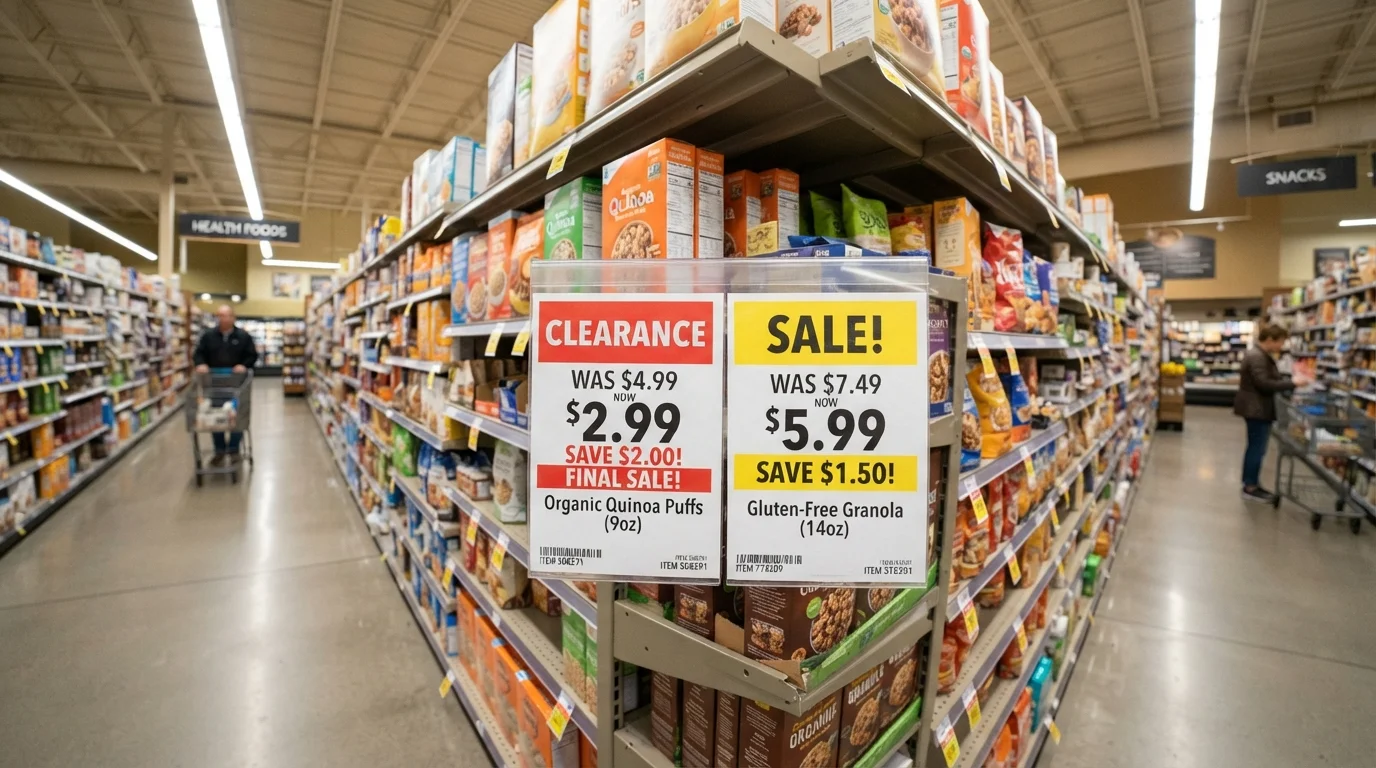
Key Takeaways
- Clearance marks items the retailer intends to stop carrying - stock is finite and won't be replenished.
- Sale pricing is a temporary markdown; the item returns to its regular price when the promotion ends.
- Clearance items more commonly carry stricter or final-sale return policies than standard promotional items.
- Sale events are planned around retail cycles; knowing those cycles helps shoppers time purchases strategically.
- Neither label guarantees the marked price reflects a genuine saving from a fair original price.
Option A
Clearance Pricing
The permanent markdown - inventory on its way out.
Best for: Shoppers who want the deepest discounts and don't need to return the item or find the same product again.
Option B
Sale Pricing
The temporary reduction - a window of opportunity on a continuing product.
Best for: Shoppers who want a discount on an in-demand item that will remain stocked and returnable after the promotion ends.
If you want the lowest possible price and don't need return flexibility
Clearance Pricing
Clearance markdowns are typically steeper than promotional sales because retailers need to move the remaining inventory completely. The trade-off is limited selection and often final-sale terms.
If you need a specific size, color, or configuration and want a full return window
Sale Pricing
Sale items remain part of the retailer's active catalog, so stock depth and standard return policies are more likely to apply during and after the event.
If you're shopping for seasonal or trend-driven goods after peak season
Clearance Pricing
End-of-season clearance is when retailers most aggressively reduce prices on seasonal merchandise to free up shelf space before new inventory arrives.
If you want to compare prices across channels before committing
Sale Pricing
Sale items are typically available online and in-store, making price comparison straightforward. Clearance selections often vary significantly by location and may not appear online.
What Each Label Actually Signals
The words clearance and sale are used interchangeably in casual conversation, but they communicate fundamentally different things to anyone paying attention to retail inventory logic.
Clearance is a retailer's signal that an item is being discontinued from their assortment. The price cut exists because the store needs to recover shelf space and remaining capital before new inventory arrives. Once those units are gone, they're gone - no reorder is coming. This is why clearance sections tend to have broken size runs, odd color options, and limited quantities.
Sale pricing, by contrast, is a temporary reduction applied to items the retailer fully intends to continue stocking. The discount is a promotional tool - designed to drive volume, attract traffic, or respond to a competitive move - and when the event ends, the price returns to its normal level and the product stays on the shelf.
Understanding this distinction changes how you approach each type of tag. For a deeper look at how retailers plan and execute these markdowns, see our guide to how retail markdowns actually work.
| Criterion | Clearance | Sale |
|---|---|---|
| Reason for discount | Item being discontinued | Temporary promotional event |
| Stock replenishment | No - sold until gone | Yes - normal reorder cycle |
| Typical discount depth | Often deeper over time | Set at promotion start |
| Return policy | Frequently final sale | Typically standard policy |
| Selection consistency | Varies by location | Usually uniform across channels |
| Timing predictability | Tied to inventory cycles | Tied to retail calendar events |
| Price direction over time | Often decreases further | Resets to regular price after event |
Return Policies, Stock Depth, and Other Practical Differences
The inventory logic behind clearance and sale pricing creates ripple effects in areas shoppers often overlook until after they've made a purchase.
Return policies
Clearance items more frequently carry restricted or final-sale return terms. Because the retailer has no replacement stock to put back on the shelf, accepting a return creates a problem they can't easily resolve. Always check the return policy before purchasing a clearance item - and factor that restriction into the value calculation. Our article on how return policies affect the real value of a discount covers this in detail.
Stock availability
Sale items are drawn from active inventory with normal replenishment cycles, so running out of a size or variant mid-promotion is less common - though not impossible during high-traffic events. Clearance stock is inherently finite; if you're on the fence, waiting is riskier than with a standard sale.
Channel consistency
Sale prices often apply uniformly across a retailer's online and physical stores, though this isn't always the case. Clearance selections, however, tend to be highly location-specific in physical retail - a store's clearance rack reflects that store's particular overstock, not a nationally uniform assortment. For more on this dynamic, see our piece on why the same item can ring up differently online versus in-store.
~60%
Shoppers who check return policy before clearance purchase
Consumer surveys consistently find that a majority of shoppers report reviewing return terms specifically when buying clearance or final-sale merchandise.
4-6 weeks
Typical clearance window before price deepens
Retail operations research suggests most brick-and-mortar retailers revisit and reduce clearance pricing every four to six weeks until inventory clears.
Timing, Cycles, and How to Use Both Strategically
Retail pricing doesn't happen randomly - it follows predictable seasonal patterns that shoppers can use to their advantage.
Clearance events are tightly linked to inventory transitions: end-of-season merchandise, model-year changeovers in categories like electronics and appliances, and post-holiday sell-offs. Retailers typically need to clear floor space within a defined window, which is why clearance discounts often deepen over time as the deadline approaches and remaining stock shrinks.
Promotional sales, on the other hand, cluster around cultural and retail calendar moments - holiday weekends, back-to-school periods, and mid-year events that have become standard across the industry. Knowing when these windows open lets shoppers plan purchases around them rather than being caught off-guard.
One caution worth noting: neither a clearance tag nor a sale banner guarantees the stated discount reflects a meaningful reduction from a genuinely established original price. Reference prices - the strikethrough figures used to frame a discount - are worth scrutinizing. Our article on what 'original price' claims really mean and our piece on the difference between a sale price and actual savings break down how reference pricing works in practice.
The bottom line: treat clearance as a liquidation event and sale as a promotional window. They both put a lower number on the tag, but the underlying mechanics - and what that means for your purchase - are quite different.
When 'Clearance' and 'Sale' Overlap
Some retailers apply both labels simultaneously - for example, marking an already-clearanced item as part of a sitewide sale event. In these cases, the clearance rules (limited stock, restricted returns) typically still govern the transaction even if additional promotional language is present. When in doubt, ask a store associate which return policy applies before completing the purchase.