

Key Takeaways
- Wearables log a wide range of health metrics, many of which sync automatically to cloud servers.
- Consumer wearable data is typically governed by company privacy policies, not healthcare privacy laws like HIPAA.
- Third-party app integrations can expand who has access to your health data beyond the device maker.
- Most platforms offer data export and deletion tools, though policies on retention vary.
- Reviewing privacy settings and app permissions is an effective way to limit unwanted data sharing.
Wearable Health Data
Wearable health data refers to the personal biological and behavioral information collected by devices like smartwatches and fitness bands - including heart rate, sleep patterns, step counts, blood oxygen levels, and more. This data is recorded continuously or periodically and typically synced to a companion app or cloud server managed by the device manufacturer. Unlike medical records, most of this data is governed by the company's privacy policy rather than healthcare regulations.
In the United States, health data collected by consumer wearables generally falls outside HIPAA protections unless the device is used in a clinical or employer-sponsored health program. This distinction carries meaningful implications for how your data can be used and shared.
What Wearables Are Actually Recording
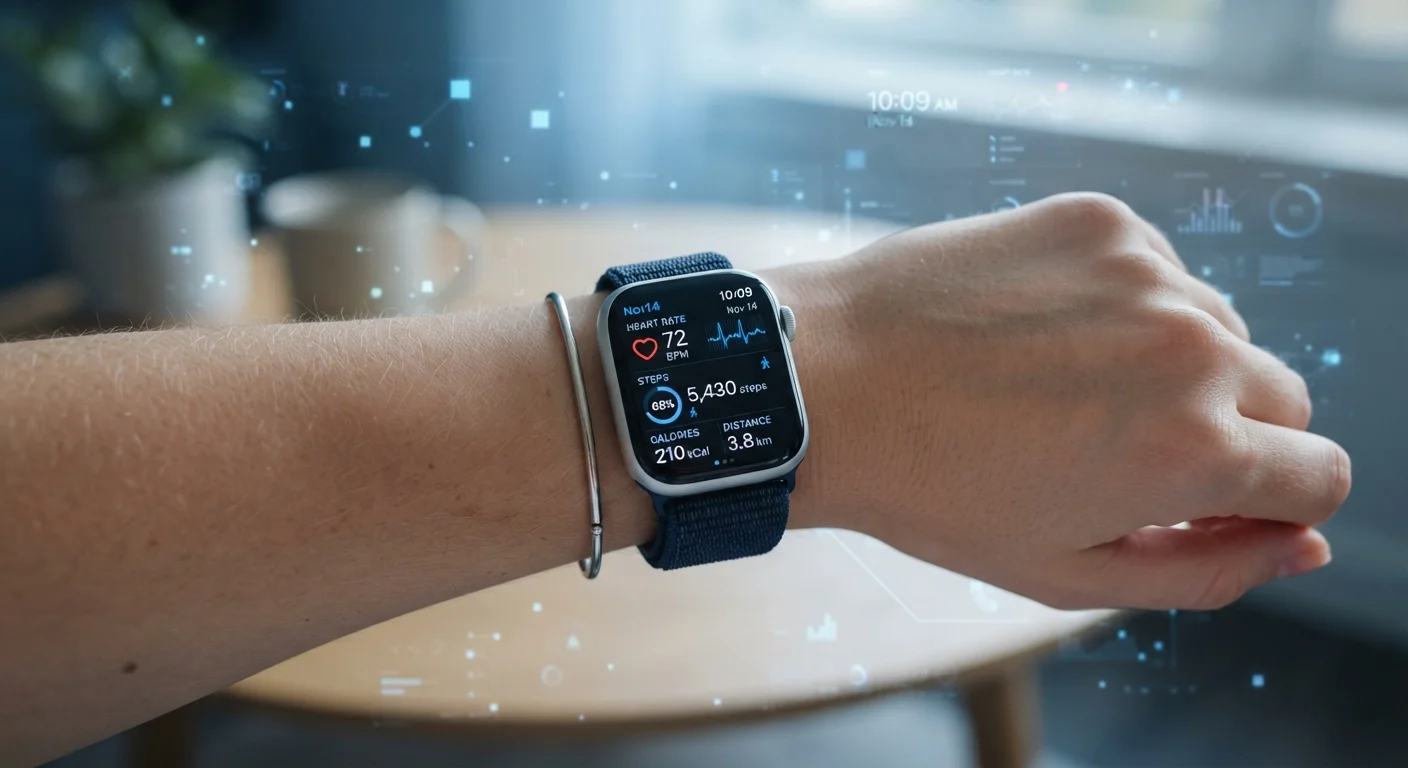
The data collection picture is broader than most users expect. A modern smartwatch or fitness band can log dozens of distinct metrics across a single day. The most common include resting and active heart rate, step count, distance traveled, calories estimated, sleep duration and stages, blood oxygen saturation (SpO2), and skin temperature. Devices with ECG capability may also capture electrical heart readings.
Beyond the obvious health metrics, wearables often record contextual data too - GPS location during workouts, ambient noise levels, and the raw motion data used to infer activity type. Some devices note the time you put them on and take them off, building a behavioral picture alongside the physiological one.
For a grounded look at which sensors are reliable versus which carry meaningful margins of error, see what fitness trackers actually measure. Understanding measurement accuracy matters when interpreting what gets stored.
30%+
US adults who use a wearable device
Pew Research Center surveys have consistently found wearable adoption growing among US adults, particularly for smartwatches and fitness bands.
20+
Distinct data types a smartwatch can log daily
Modern flagship smartwatches can track heart rate, SpO2, sleep stages, skin temperature, activity type, GPS, and more across a single 24-hour period.
Varies
Data retention period after account deletion
Retention policies differ substantially across platforms; some delete personal data within weeks of account closure, while others retain anonymized records indefinitely.
Where Your Data Goes After It Leaves Your Wrist
Most wearables are designed to sync data - first to the companion app on your smartphone, and then to the manufacturer's cloud servers. This sync often happens automatically and continuously. Storing data remotely allows you to access your health history across devices and keeps records intact if the wearable is lost or replaced.
The practical consequence is that your biometric information lives in at least two places: your phone and a corporate server. What happens to it there is dictated by the company's privacy policy, not by health privacy regulations that apply to doctors and hospitals. In the US, this means the HIPAA framework that protects medical records generally does not apply to consumer wearable platforms.
Consumer Wearables vs. Medical Devices
There is a meaningful legal and regulatory distinction between a consumer smartwatch and a certified medical device. FDA-cleared devices used in clinical settings operate under stricter oversight, and the data they generate may fall under different privacy frameworks. Most commercially available fitness bands and smartwatches are consumer electronics, not medical devices, regardless of the sophistication of their sensors.
Third-party integrations expand this picture further. If you've connected your wearable platform to a nutrition app, a sleep coaching tool, or even an insurance wellness program, each of those connections represents an additional party with access to some portion of your health data. The relevant question is what each connected app is permitted to do with what it receives - and that's governed by its own separate privacy policy. For more on how app permissions work in practice, see what app permissions actually grant access to.
Who Can Access Your Health Data - and Under What Conditions
The most direct access to your wearable data belongs to the device manufacturer and their platform team. Beyond internal use, most platforms describe sharing your data in three ways: with your explicit consent (such as when you authorize a third-party app), in aggregated and anonymized form for research or product development, and in response to valid legal requests.
That third category - legal requests - is worth understanding. Law enforcement agencies can subpoena health data held by a private company, and the company's cooperation is generally governed by its own legal team and applicable law rather than the user's preferences. Several court cases in the US have involved fitness tracker data submitted as evidence, which illustrates that this data has real-world legal weight.
Review Connected Apps Annually
Take a few minutes each year to open your wearable platform's app and audit which third-party services have been granted access to your health data. Revoking access for apps you no longer actively use is a straightforward way to reduce your data footprint without affecting your core device functionality.
Employers and insurers sometimes factor into this picture. If your wearable was provided through a workplace wellness program or an insurance incentive plan, the entity running that program may receive data about your activity levels, though the scope of sharing should be disclosed in program terms. This is a meaningfully different arrangement from a device you purchase and use independently.
For a broader look at how connected devices handle data collection and what you can do about it, the smart home privacy explainer covers similar questions in a different context.
Taking Stock of Your Own Data Footprint
Most major wearable platforms offer users the ability to export their data - typically as a downloadable file containing your historical health records. This is worth doing periodically, both as a backup and as a way to understand the scope of what's been collected. Account deletion is also available on most platforms, though retention periods after closure vary and are worth checking in the privacy policy.
Reviewing which third-party apps are connected to your health platform is a practical step that many users overlook. Revoking access for apps you no longer use limits the number of parties that can continue pulling your data. Similarly, checking location and background sync settings on your phone can reduce the frequency and detail of data that flows outward.
If you track workouts and want to understand what types of data are most useful to capture intentionally - as opposed to what a device logs automatically - workout tracking guidance offers a useful complement to this picture. And for context on how wearables fit into the broader landscape of personal health monitoring, wearable tech's evolving role in health monitoring explores where these devices are headed.
This article is for general informational purposes only and does not constitute medical, legal, or privacy advice. Readers should consult qualified professionals for guidance specific to their circumstances.