

Key Takeaways
- Wearables can detect meaningful health patterns, but they are not medical diagnostic devices.
- Heart rate and step tracking are among the most reliable metrics; sleep staging and SpO2 are less precise.
- Continuous passive monitoring is a genuine advantage for catching trends over time.
- Data privacy is an important consideration - your health metrics are stored and potentially shared.
- Always consult a qualified healthcare professional before acting on wearable health data.
Continuous trend monitoring reveals patterns over time
Unlike point-in-time clinical readings, wearables generate data across days and weeks, making it possible to spot emerging trends in resting heart rate, activity levels, or sleep duration that would otherwise go unnoticed.
AFib detection can prompt timely medical follow-up
Some FDA-cleared wearables can flag potential atrial fibrillation, a heart rhythm irregularity linked to stroke risk. Real-world cases have shown these alerts leading users to seek evaluation that confirmed the condition.
Encourages consistent physical activity habits
Goal reminders, activity rings, and step counts create low-stakes daily accountability that research suggests can nudge users toward more consistent movement. See fitness lifestyle guidance for broader context.
Non-invasive and convenient for everyday use
Wearables require no finger pricks, lab visits, or clinical appointments to generate useful data - they run quietly in the background of daily life, lowering the barrier to health awareness.
Optical sensors lose accuracy during movement
Heart rate and SpO2 readings degrade meaningfully during high-intensity exercise or when the device shifts position, limiting reliability precisely when accurate data might matter most.
Sleep staging accuracy falls short of clinical standards
Consumer wearables infer sleep stages from movement and heart rate rather than brain activity, introducing significant uncertainty into metrics that often appear deceptively precise on-screen.
Health data privacy carries real risks
Detailed personal health metrics are stored by device manufacturers and subject to terms of service that may permit third-party sharing - a risk most users don't evaluate before enabling features.
False alerts can cause unnecessary anxiety
Irregular rhythm notifications and other health alerts occasionally trigger for benign reasons, and without medical context, users may experience significant anxiety over readings that a clinician would dismiss.
Skin tone and fit affect sensor reliability
Optical sensors have documented variability in accuracy across different skin tones, and improper device fit compounds the problem - meaning not all users get equally reliable readings from the same hardware.
Our Verdict
Wearable health monitors offer real value as everyday awareness tools - they surface trends, encourage movement, and can flag anomalies worth discussing with a doctor. Their limitations in clinical accuracy, however, mean they should complement - never replace - professional medical assessment. Used with appropriate expectations, they represent a genuinely useful addition to personal health awareness.
Best suited to health-conscious adults who want a low-friction way to track activity, sleep, and cardiovascular trends over time, and who understand the difference between consumer wellness data and clinical diagnosis.
From Step Counters to Health Sensors
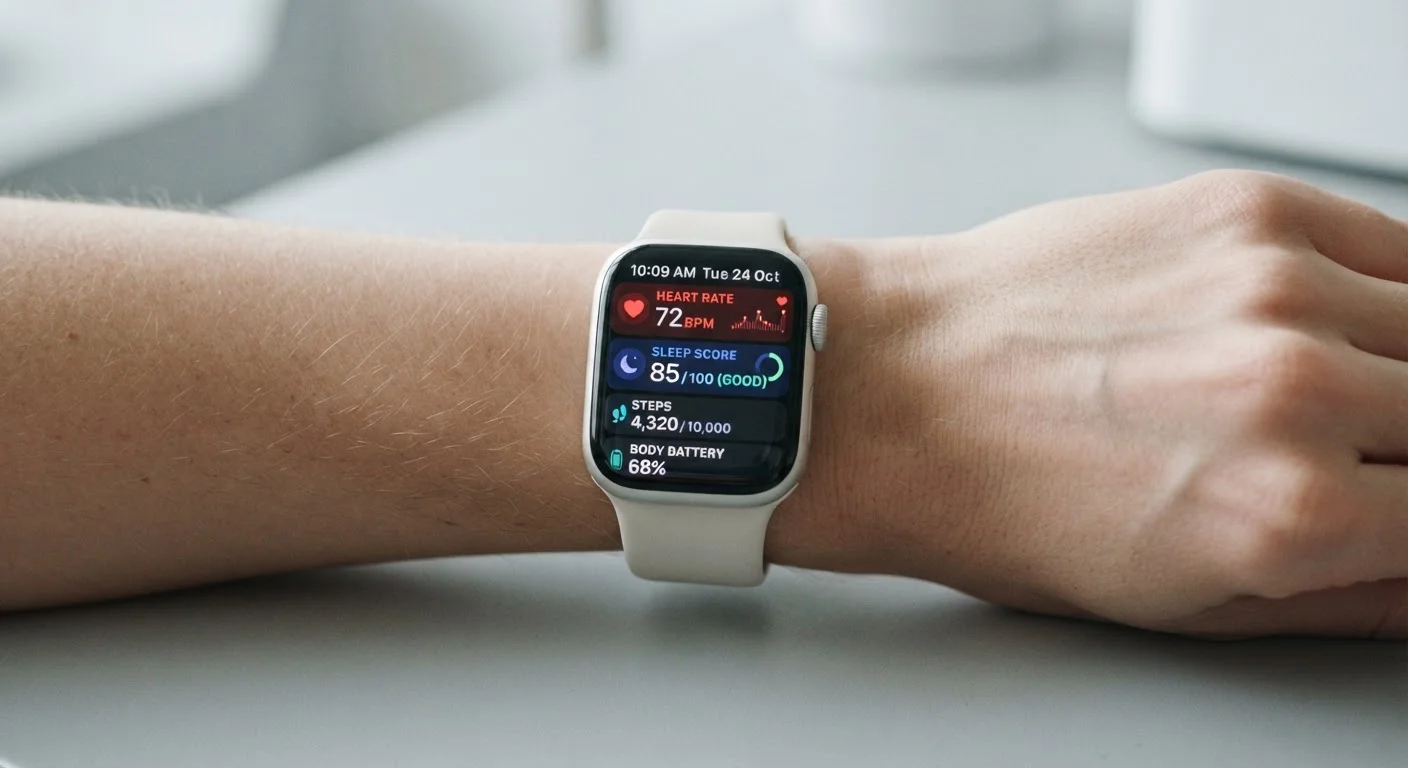
A decade ago, a fitness tracker counted your steps and not much else. Today's wearables - from smartwatches to dedicated health bands - measure heart rate continuously, estimate blood oxygen saturation (SpO2), track sleep stages, detect irregular heart rhythms, and in some cases monitor skin temperature or stress indicators. The hardware has outpaced most consumers' understanding of what it actually delivers.
That gap between capability and comprehension matters. These devices sit in a fascinating middle ground: sophisticated enough to surface genuinely useful health signals, yet not precise enough to replace clinical measurement. For everyday users, understanding that distinction is the foundation of using wearables well. Explore our full gadgets coverage for broader context on consumer electronics.
What Wearables Do Well
The strongest use case for wearable health tech is continuous, passive trend monitoring. A one-off reading in a doctor's office captures a single moment; a wearable captures thousands of data points across weeks and months, making patterns visible that a snapshot never could.
Continuous trend monitoring reveals patterns over time
Unlike point-in-time clinical readings, wearables generate data across days and weeks, making it possible to spot emerging trends in resting heart rate, activity levels, or sleep duration that would otherwise go unnoticed.
AFib detection can prompt timely medical follow-up
Some FDA-cleared wearables can flag potential atrial fibrillation, a heart rhythm irregularity linked to stroke risk. Real-world cases have shown these alerts leading users to seek evaluation that confirmed the condition.
Encourages consistent physical activity habits
Goal reminders, activity rings, and step counts create low-stakes daily accountability that research suggests can nudge users toward more consistent movement. See fitness lifestyle guidance for broader context.
Non-invasive and convenient for everyday use
Wearables require no finger pricks, lab visits, or clinical appointments to generate useful data - they run quietly in the background of daily life, lowering the barrier to health awareness.
~30%
Share of US adults who regularly use a wearable
Pew Research Center surveys have found roughly three in ten US adults use a smartwatch or fitness tracker on a regular basis.
±5 bpm
Typical resting heart rate margin of error
Independent validation studies generally find wrist-based optical heart rate sensors accurate to within around 5 beats per minute at rest, with wider variance during activity.
Sleep tracking, while imperfect in staging accuracy, reliably highlights gross disruptions - consistently short sleep windows, frequent awakenings, and unusual restlessness are all meaningful signals. Similarly, resting heart rate tracked over time is a well-established proxy for cardiovascular fitness, and wearables capture it with reasonable consistency.
Perhaps most practically significant is the ability to detect atrial fibrillation (AFib) in some devices cleared for that purpose by the FDA. While not a substitute for an ECG, these alerts have prompted users to seek evaluation that led to real diagnoses - a meaningful real-world benefit. For more on what specific trackers can and can't measure, see our detailed breakdown of fitness tracker accuracy.
Where the Limitations Show
The marketing around wearable health features often implies clinical-grade precision. The reality is more nuanced. Optical heart rate sensors work by shining light through skin and measuring blood flow changes - a method that performs well at rest but degrades during vigorous movement, in cold conditions, or when fit is inconsistent. SpO2 readings are particularly sensitive to skin tone, device positioning, and motion, making single readings unreliable.
Optical sensors lose accuracy during movement
Heart rate and SpO2 readings degrade meaningfully during high-intensity exercise or when the device shifts position, limiting reliability precisely when accurate data might matter most.
Sleep staging accuracy falls short of clinical standards
Consumer wearables infer sleep stages from movement and heart rate rather than brain activity, introducing significant uncertainty into metrics that often appear deceptively precise on-screen.
Health data privacy carries real risks
Detailed personal health metrics are stored by device manufacturers and subject to terms of service that may permit third-party sharing - a risk most users don't evaluate before enabling features.
False alerts can cause unnecessary anxiety
Irregular rhythm notifications and other health alerts occasionally trigger for benign reasons, and without medical context, users may experience significant anxiety over readings that a clinician would dismiss.
Skin tone and fit affect sensor reliability
Optical sensors have documented variability in accuracy across different skin tones, and improper device fit compounds the problem - meaning not all users get equally reliable readings from the same hardware.
Sleep staging - sorting sleep into light, deep, and REM phases - remains one of the weaker features across most consumer wearables. Lab-grade sleep studies use brain wave measurements; wrist-based devices infer stages from movement and heart rate, a far less direct method. The numbers can feel authoritative while carrying meaningful uncertainty. For a candid look at accuracy across multiple metrics, this overview of what fitness trackers actually measure is worth reading.
Privacy: The Data You Generate
Health data generated by wearables doesn't only stay on your wrist. It flows to manufacturer apps, is stored on cloud servers, and is governed by terms of service that most users never read. Depending on the platform and jurisdiction, that data may be shared with third parties, used for product improvement, or potentially accessible in legal proceedings.
Your Health Data Is Not Fully Private
Health metrics collected by wearables are typically stored on manufacturer servers and governed by platform-specific privacy policies. These policies vary significantly in how data may be used, retained, or shared. Before enabling features like heart health monitoring or menstrual cycle tracking, it's worth reviewing the privacy settings available in your device's companion app and understanding what data export or deletion options exist.
Understanding what gets logged - and by whom - is a necessary part of using these devices responsibly. Our article on wearables and health data storage covers this in detail. If you're already thinking about connected-device privacy more broadly, smart home privacy considerations follows similar principles.
This article is for informational purposes only and does not constitute medical advice. Always consult a qualified healthcare professional for guidance on your personal health.