

Key Takeaways
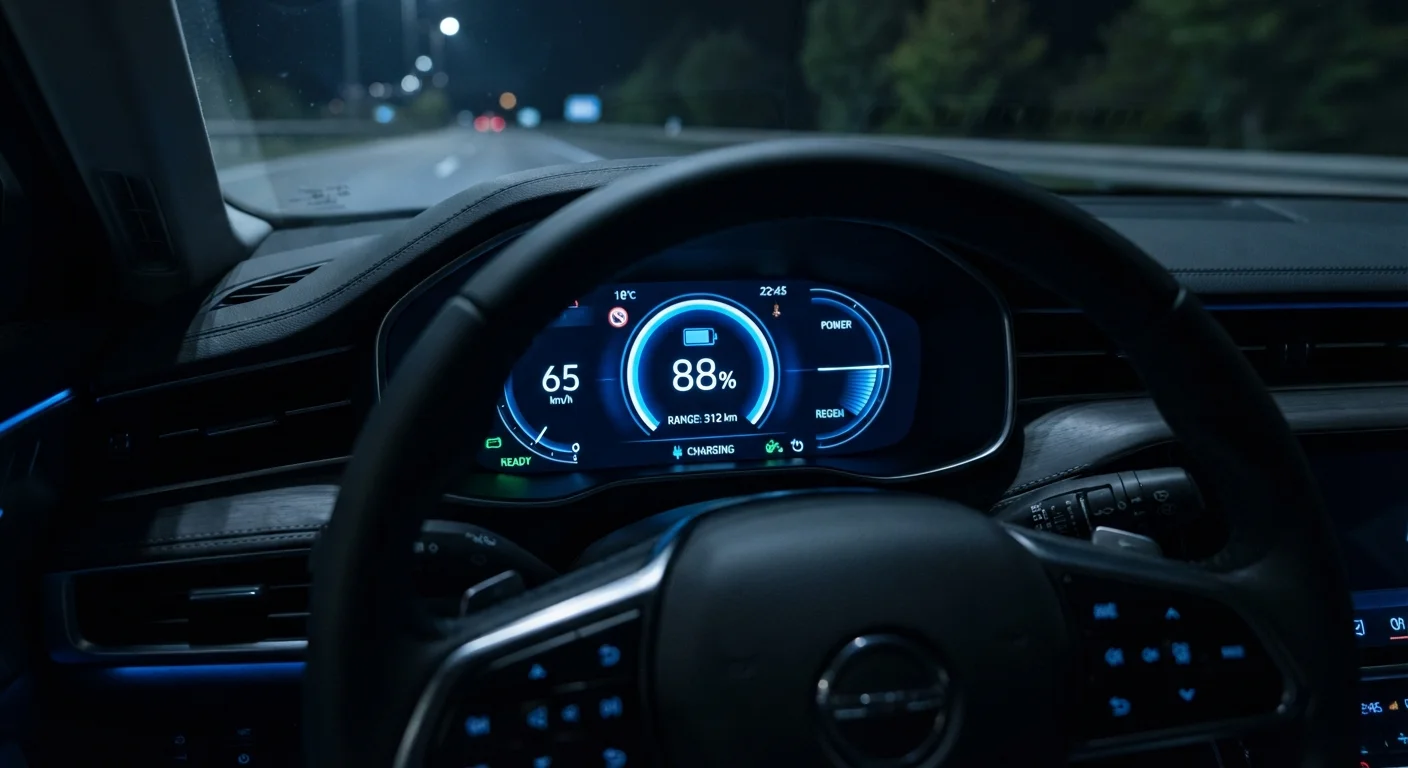
- SoC is your real-time battery level, similar to a fuel gauge - it changes every time you drive or charge.
- SoH reflects long-term battery health and declines gradually over months and years of use.
- A high SoC reading doesn't mean your battery is healthy - a degraded battery can still show 100%.
- SoH directly affects your real-world driving range, even if your rated range hasn't changed on paper.
- Charging habits, temperature exposure, and usage patterns all influence how quickly SoH declines.
- Most EV battery warranties cover SoH degradation below a specified threshold, typically around 70-80%.
State of Charge & State of Health
State of Charge (SoC) is the percentage of energy currently stored in your EV battery - essentially the fuel gauge. State of Health (SoH) is a measure of your battery's overall condition compared to when it was new, expressed as a percentage of its original capacity. SoC tells you how much energy you have right now; SoH tells you how much your battery is capable of holding over the long run.
SoC is calculated dynamically using voltage, current integration, and temperature compensation algorithms. SoH is typically derived by comparing the battery's measured usable capacity against its rated factory capacity, and may also factor in internal resistance over time.
Two Numbers, Two Different Questions
Every EV driver watches the percentage in the corner of their display. But that single number - State of Charge - only answers one question: how much energy do I have right now? It doesn't tell you whether your battery is aging well, losing capacity, or approaching the limits of its warranty protection.
State of Health answers a different question entirely: how capable is my battery compared to the day I drove off the lot? Understanding both figures - and how they interact - gives EV owners a much clearer picture of what's actually happening under the hood. For a broader look at how EV ownership differs day-to-day, see our guide to electric vehicle ownership.
~2.3%
Average annual EV battery capacity loss
Analysis of real-world EV fleet data by Recurrent Auto found average annual degradation rates of approximately 2-2.5% across a broad sample of vehicles.
70-80%
Typical EV battery warranty SoH floor
Most major EV manufacturers set their battery capacity warranty threshold between 70% and 80% SoH within a defined mileage or time window, though terms vary by brand.
State of Charge: Your Real-Time Energy Gauge
SoC operates in real time. It rises when you plug in, falls as you accelerate, and fluctuates with temperature and driving style. The vehicle's battery management system (BMS) calculates it continuously using a combination of voltage readings, current flow measurements, and temperature data - because all three affect how much energy is actually accessible at any given moment.
One nuance worth knowing: the SoC percentage your display shows may not represent the full physical range of the battery. Manufacturers typically set a buffer zone at both ends of the pack - charge never actually reaches 0% or 100% of the cells' true limits. This protects the chemistry and extends longevity. So when your car reads 100%, the cells are charged to a carefully managed ceiling, not their absolute maximum.
SoC is also what powers your range estimate. Because range prediction depends on current energy levels and recent driving conditions, the number can shift noticeably during a trip. Why your estimated arrival charge changes mid-trip comes down to exactly this kind of dynamic recalculation.
State of Health: The Long Game
SoH is a slower-moving figure. It doesn't change noticeably between charges - it shifts over months and years. When a battery is new, its SoH is 100%. Over time, through repeated charge-discharge cycles and exposure to heat and cold, the cells lose some of their ability to store energy. SoH tracks that loss.
A battery at 85% SoH on a vehicle originally rated for 300 miles of range will now deliver roughly 255 miles at full charge - not because something has gone wrong, but because degradation is a normal, expected part of battery chemistry. To understand the energy units underlying these figures, understanding kilowatt-hours explains the foundational spec sheet terminology.
Most manufacturers cover battery degradation below a set SoH threshold under warranty. If SoH falls too far within the warranty period, the battery pack may be eligible for repair or replacement - though the specific terms differ across automakers.
What Affects SoH - and What You Can Do
Several factors influence how quickly SoH declines:
- Heat: High ambient temperatures and thermal stress from frequent fast charging accelerate cell aging. Parking in shade and using thermal management features helps.
- Charge frequency and depth: Repeatedly charging to 100% or depleting to near 0% stresses cells more than staying within a moderate range, say 20-80%, for daily use.
- Charging speed: DC fast charging delivers energy quickly but generates more heat inside the pack. The difference between AC and DC charging explains why charging speed affects the battery differently at a chemistry level.
- Time: Even without heavy use, lithium-ion cells age. Calendar aging - degradation from time alone - is a real factor.
Simple Habits That Protect SoH
For everyday driving, many EV owners find it beneficial to set their charger to stop at 80% rather than 100%, reserving full charges for long trips. Avoiding prolonged exposure to extreme heat while charging - and letting the battery cool after a DC fast-charging session - can also slow the rate of capacity loss over time. Check your vehicle's owner manual for manufacturer-specific recommendations.
For a detailed look at what long-term data shows about how fast degradation actually occurs, EV battery degradation over time covers what research and fleet studies reveal.
“The battery management system is the unsung hero of every electric vehicle - it's constantly balancing charge, temperature, and cell health to maximize both performance and longevity.”
— Venkat Srinivasan, Director, Argonne Collaborative Center for Energy Storage Science (ACCESS), Argonne National Laboratory