

Key Takeaways
- Poor grading is one of the most common causes of foundation water intrusion and basement moisture problems.
- A yard should slope at least 2% away from the house for the first 6-10 feet to move water safely away.
- Several drainage solutions exist - from regrading soil to installing French drains - and the right choice depends on diagnosing the underlying cause first.
- Some drainage work is DIY-friendly; projects involving significant regrading or structural drainage near foundations typically require a licensed professional.
- Good grading also supports healthier plants by preventing root rot from standing water.
Yard Grading and Drainage
Yard grading refers to the deliberate shaping of the ground's surface so that water flows in a controlled direction - typically away from your home's foundation and toward a safe outlet. Drainage describes the full system (soil, slope, channels, and structures) that moves that water off your property without causing erosion or pooling. Together, they form the invisible framework underneath every healthy, functional outdoor space.
The general industry standard recommends a minimum slope of 2% - meaning 2 inches of drop for every 10 feet of horizontal distance - measured away from any structure's foundation for at least the first 6 to 10 feet.
Why Water Movement Shapes Everything in Your Yard
Most homeowners think about their yard in terms of what's visible - the grass, beds, patios, and trees. But the ground beneath all of it is quietly managing one of the most consequential forces in home maintenance: water. Every time it rains, thousands of gallons of water land on and around your property. Where that water goes is determined almost entirely by grade - the angle and shape of the land - and by the drainage systems built to guide it.
When grading works correctly, rainwater sheds away from your home, soaks into planted areas at a manageable rate, and exits your property without pooling or causing erosion. When it doesn't, you get soggy lawns, flooded basements, dead plants, and eventually - if left unaddressed - structural damage. Understanding these fundamentals helps you treat your yard as a system rather than a collection of separate features.
This connects directly to the broader goal of landscaping as a functional home upgrade - drainage isn't decorative, but it enables everything decorative to thrive.
2%
Minimum slope away from foundation
Industry guidelines generally recommend at least a 2% grade - roughly 2 inches per 10 feet - sloping away from any structure.
~34%
U.S. homes with basement moisture issues
The American Society of Home Inspectors has estimated that a significant share of U.S. homes experience some form of below-grade moisture intrusion, often linked to grading deficiencies.
5-6 ft
Minimum downspout discharge distance from foundation
Most drainage professionals recommend discharging gutter downspouts at least 5 to 6 feet away from the foundation to prevent concentrated water intrusion.
What Grading Actually Means - and How to Assess Yours
Grading is simply the slope of the ground. In the context of residential landscaping, it has two concerns: positive grade, which slopes away from the house, and negative grade, which slopes toward it. Positive grading is what you want near any structure; negative grading is how foundation water problems begin.
To assess your current grade, wait for a dry day and use a long level and tape measure. Lay the level on a straight 2x4 extending from the foundation outward. Measure the drop at the far end. A drop of roughly 2 inches over 10 feet meets the commonly cited minimum standard. Less than that - especially if the soil is clay-heavy - may not move water away fast enough.
Beyond the immediate foundation zone, your yard's broader contours matter too. Low spots, also called swales (shallow, channel-like depressions designed to collect and redirect water), can be either intentional drainage features or accidental problem areas. Knowing which you have is the starting point for any fix.
Quick Visual Check After Heavy Rain
Walk your property 30-60 minutes after a significant rain event and note exactly where water is standing, which direction it's flowing, and how close any pooling is to the foundation or fence line. Taking photos is especially helpful - these observations are the most accurate diagnostic tool you have before calling a professional or starting any grading work.
Common Drainage Solutions and When Each Applies
Once you understand your yard's water behavior, you can match a solution to the actual problem rather than guessing. Here are the most common approaches:
- Regrading with topsoil: Adding soil and reshaping the surface to achieve the correct outward slope. Works well for minor issues near foundations or around low spots in the lawn.
- French drains: Perforated pipes buried in gravel-filled trenches that intercept subsurface water. Best suited for yards where water saturates the soil below the surface, especially in clay-heavy areas.
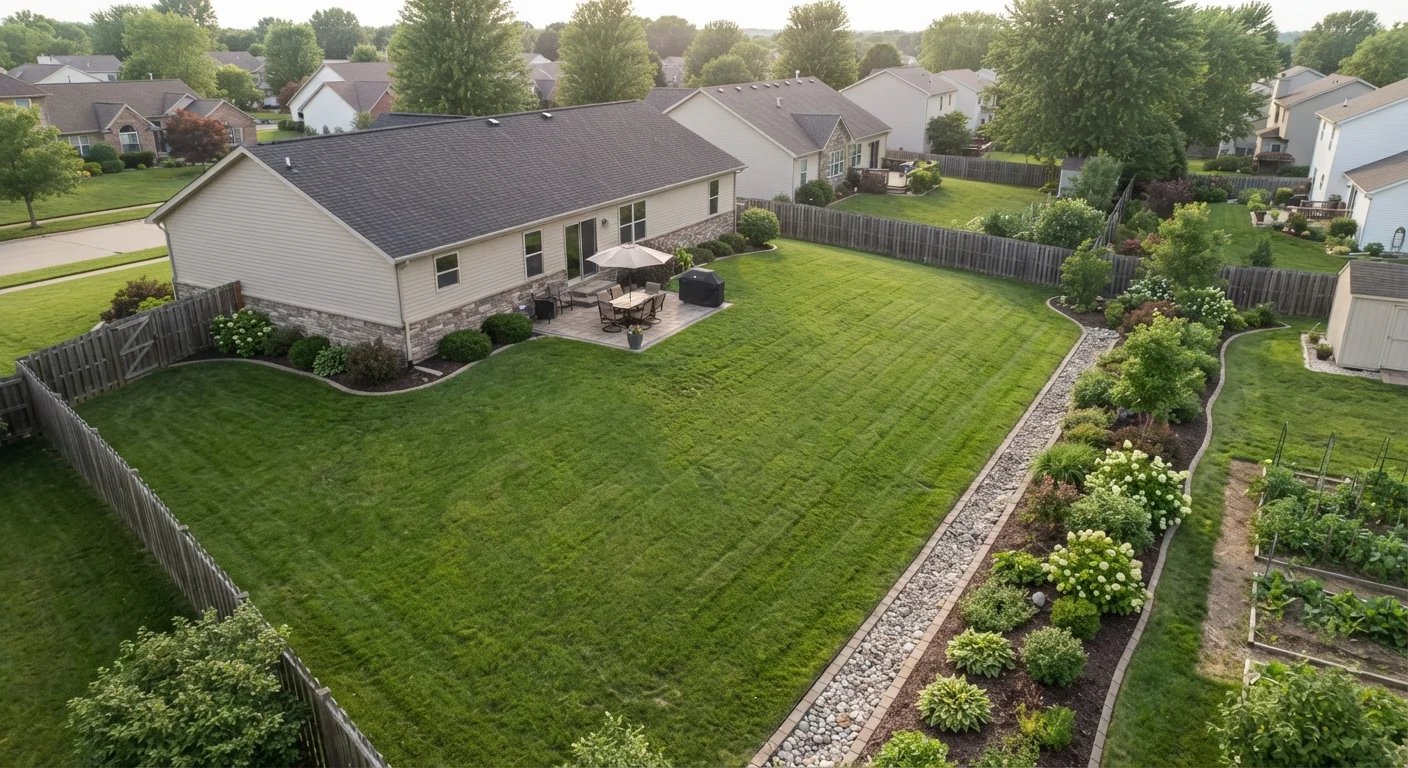
- Dry creek beds: Shallow, rock-lined channels that carry surface runoff during rain events. These blend naturally into landscape design and are a good fit when you need both function and visual appeal.
- Downspout extensions and splash blocks: One of the most overlooked fixes - redirecting gutter downspouts so water discharges at least 5-6 feet from the foundation rather than pooling right against it.
- Catch basins: Grated inlets set flush with the lawn surface that collect surface runoff and connect to an underground pipe. Useful in very flat yards or paved areas where surface grading alone can't move water.
For a deeper look at how these issues present and how to pinpoint their source, see our guide to identifying backyard drainage problems before you start digging.
Integrating Drainage Into a Thoughtful Outdoor Plan
Drainage doesn't have to be purely functional. Swales can become planted rain gardens filled with moisture-tolerant native species. Dry creek beds double as landscape features. Even the choice of where to place a patio or raised garden bed should account for water flow - hardscape and softscape elements interact directly with how rain moves across your property. Our overview of hardscape and softscape planning explains how these elements work together.
If you're building raised garden beds, siting them so they don't block natural drainage channels matters as much as the soil mix inside them. Similarly, mulching around plantings helps slow surface runoff and encourage absorption - a small but meaningful complement to larger drainage work.
It's also worth noting that mature trees affect subsurface drainage, and their roots can interact with drainage infrastructure over time. Our article on how tree roots interact with underground utilities and foundations covers what homeowners should understand before siting trees near drainage lines.
When in doubt - especially for projects involving excavation, permits, or work within a few feet of your foundation - consult a licensed landscape contractor or civil engineer. The cost of professional assessment is almost always less than the cost of repairing foundation damage caused by years of poor drainage.
“Grading is the single most important factor in protecting a foundation from water damage. It's also one of the most commonly neglected - because when it's done right, you never see it working.”
— National Association of Home Inspectors, Professional standards organization for residential home inspection