

Key Takeaways
- Speeding even slightly above the posted limit is still a ticketable offense in every US state.
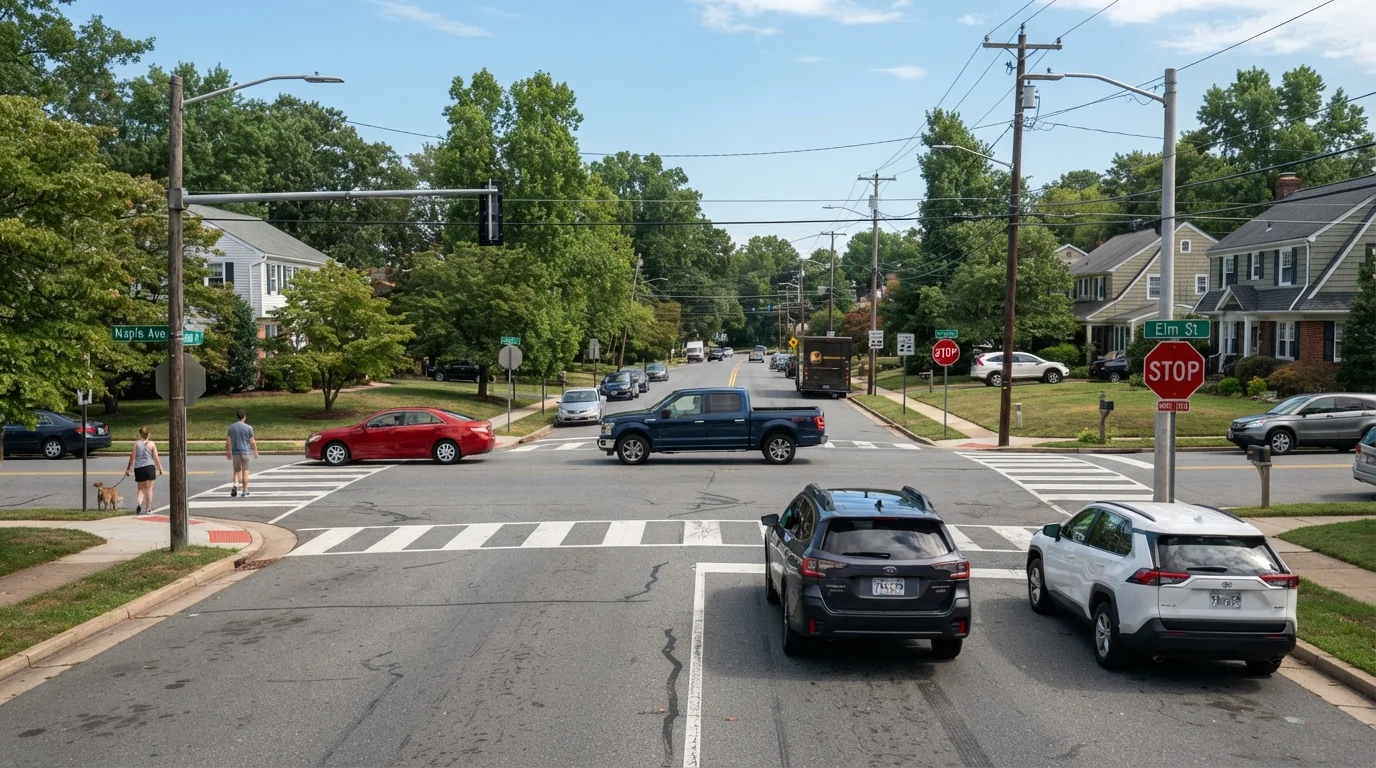
- Four-way stop rules follow a specific legal order of precedence, not just who arrives first.
- Hands-free phone use still significantly impairs driving - it is not legally equivalent to being distraction-free.
- Hazard lights while driving in rain are illegal in several states and can confuse other drivers.
- The three-second following distance rule applies only in ideal conditions - more space is often needed.
Why Driving Myths Are More Than Just Harmless Misunderstandings
Most drivers don't set out to break traffic law - but many unknowingly do, because widely repeated beliefs about road rules aren't always accurate. These myths persist through casual conversation, misremembered driver's ed, and assumptions that haven't been tested since the learner's permit days. The result is real risk: citations, collisions, and legal liability that could have been avoided.
The myths below are among the most commonly held - and the most consistently misunderstood. For a broader look at how misconceptions affect everyday decisions, car ownership myths that cost drivers money covers parallel problems in vehicle maintenance. On the road itself, knowing what the law actually says matters just as much as mechanical knowledge.
Myth
It's fine to drive 10 mph over the speed limit - officers won't pull you over for that.
Fact
Any speed above the posted limit is a legal violation; there is no built-in buffer in US traffic law.
The idea of a universal "10-over" tolerance is not codified anywhere in US law. Enforcement discretion varies by jurisdiction, officer, and road conditions - but the law itself treats any speed above the posted limit as a violation. In construction zones and school zones, fines for modest exceedances can be substantially higher. Driving consistently above the limit also changes crash dynamics significantly: stopping distance increases with speed, and collision severity rises sharply at higher impact velocities.
Myth
Using a hands-free phone while driving is safe and legally equivalent to not using a phone at all.
Fact
Hands-free calls still cause significant cognitive distraction and are restricted or discouraged under law in many states.
Research from the National Safety Council and others has consistently found that hands-free phone use impairs reaction time and situational awareness, even when both hands remain on the wheel. The distraction is primarily cognitive - the brain processing a conversation - not just physical. While hands-free use is less restricted than handheld in most states, it is not risk-free, and several jurisdictions are moving toward broader restrictions. Assuming hands-free means distraction-free is a meaningful and well-documented error.
Myth
Turning on hazard lights while driving in rain makes you safer and is always legal.
Fact
Driving with hazard lights active is illegal in a number of states and can actually reduce safety by masking turn signals.
Hazard lights are designed to indicate a stationary or slow-moving vehicle in an emergency. When used while driving in rain, they prevent other drivers from reading your turn signals - a key source of confusion that can contribute to accidents. States including California, New York, and others explicitly prohibit the use of hazard lights on a moving vehicle except in specific circumstances. Check your state's vehicle code rather than assuming it's a safe or legal practice.
Myth
At a four-way stop, whoever gets there first always goes first - no exceptions.
Fact
Four-way stop rules follow a structured order of precedence that accounts for simultaneous arrivals and vehicle position.
Arrival order is a factor, but it's not the whole rule. When two vehicles arrive at roughly the same time, right-of-way generally goes to the driver on the right. When vehicles are directly across from each other and one is turning left, the vehicle going straight typically has priority. These rules are codified in state traffic law and are designed to create predictable, collision-reducing behavior. Treating the intersection as purely first-come, first-served leads to hesitation, miscommunication, and preventable collisions.
Myth
The three-second following distance rule is sufficient in all conditions.
Fact
Three seconds is a minimum baseline for ideal conditions; adverse conditions, higher speeds, and heavy loads all require more space.
The three-second rule is a practical starting point, not a universal safety guarantee. At highway speeds, reaction time and braking distance increase substantially. Wet or icy pavement can multiply stopping distances by two to four times. Drivers towing trailers or carrying heavy cargo face additional braking demands. Safety guidance and driver training programs consistently recommend four seconds or more in poor visibility, bad weather, or high-speed situations. Tailgating remains one of the leading contributors to rear-end collisions on US roads.
Speed, Stops, and Right-of-Way: The Rules People Get Wrong Most Often
Traffic law is more precise - and less forgiving - than many drivers assume. Officers have discretion, but the law itself doesn't include a built-in buffer. Understanding what's actually on the books helps drivers make better decisions, not just lucky ones.
40%
Of rear-end crashes involve following too closely
The NHTSA has identified tailgating as a factor in a substantial share of rear-end collisions, which are among the most common crash types in the US.
9x
Crash risk increase from handheld phone use while driving
Research from the Virginia Tech Transportation Institute found handheld phone use dramatically elevated crash risk compared to undistracted driving.
All 50
US states with active Move Over laws
Every US state has enacted some form of Move Over legislation, though the specific vehicle types and distance requirements vary by state.
Four-way stops are another persistent source of confusion. The rule isn't simply first-come, first-served - there's a defined order of precedence based on arrival sequence, position, and right-of-way conventions. Four-way stop rules and the order of precedence explains exactly how ties and simultaneous arrivals are handled under standard traffic law.
Following distance is similarly underestimated. The common three-second rule is a minimum baseline for dry pavement at moderate speeds. Wet roads, heavy loads, older brake systems, and high-speed highways all call for greater separation. Safe following distance guidance breaks down when and how to extend that gap.
Construction Zone Fines Can Double or Triple
Speeding violations in active construction zones carry elevated fines in most US states, and some states add points to your license at a higher rate. The threshold for 'active' - meaning workers must be present, or merely that signs are posted - varies by state. Assuming standard fines apply in a work zone is a costly assumption to test.
Move Over laws are another area where assumptions diverge sharply from reality. All 50 states have some version of a Move Over requirement, but the specific vehicles and situations covered vary. What Move Over laws require and why they exist outlines the general framework and common penalties.
Understanding the Legal Distinction Between Common Violations
Not all traffic violations carry the same legal weight, and misunderstanding that distinction can have lasting consequences. Reckless driving, for instance, is a criminal charge in many states - not simply a traffic infraction - even when the underlying behavior seems similar to careless driving. The difference between reckless and careless driving covers how courts and state statutes typically separate the two.
Reckless Driving Is a Criminal Charge in Many States
Unlike a standard speeding ticket, reckless driving can result in misdemeanor or felony charges, license suspension, and a permanent criminal record in many jurisdictions. The distinction between reckless and careless driving isn't always obvious from the driver's perspective - but courts apply it consequentially. If you're cited for reckless driving, consulting a licensed attorney is strongly advisable before responding to the charge.
Speed limit signs are also more nuanced than they appear. Advisory speed signs - the yellow ones on curves - carry different legal weight than the white regulatory signs most drivers recognize. What advisory vs. regulatory speed limit signs actually mean clarifies the difference. And for anyone who drives through work zones, construction zone driving rules and fines explains why those zones carry elevated penalties even when conditions look the same as regular roadway.